
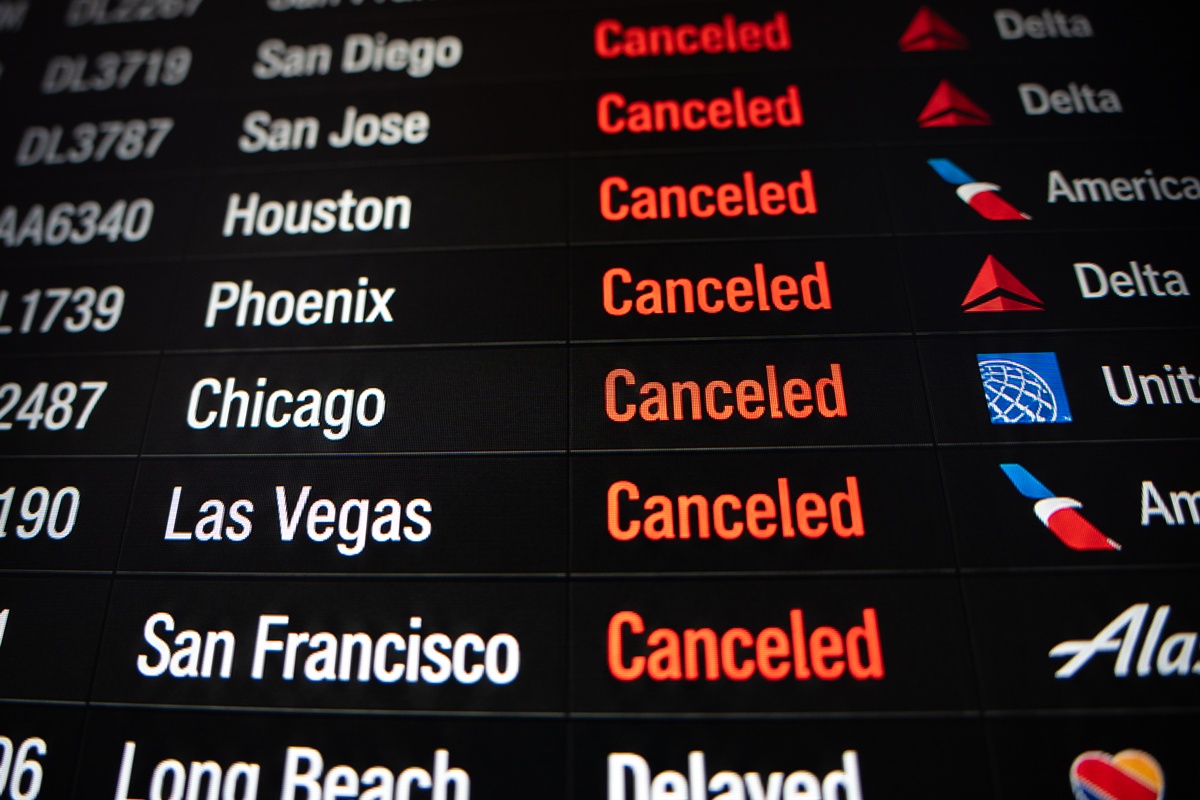
More than 4,000 flights were canceled across the United States on Nov. 14 as disruptions continued after a four-hour pause in air traffic operations the night before. (Foto: Instagram)
More than 4,000 flights were canceled across the United States on Saturday, Nov. 14, as disruptions continued after air traffic operations were interrupted the previous day. Flight Aware reported 4,030 cancellations and 2,586 delays that morning. John F. Kennedy International Airport in New York City was among the airports hit hardest, and airlines advised passengers to check their flight status before leaving home.
Flights resumed at about 10 p.m. Friday, Nov. 13, after roughly four hours of interruptions. The Federal Aviation Administration said it had lifted its ban on takeoffs, adding that some flights were beginning to depart again. The agency said passenger safety was its highest priority.
Transportation Secretary Sean Duffy said the return to normal operations would be gradual and could take time, depending on available airport capacity and the availability of pilots and other crew members. He said he believed the system would be back in operation by the peak of Thanksgiving travel. The national holiday falls on Nov. 26.
In Brazil, the National Civil Aviation Agency said it was monitoring the situation and advised people scheduled to travel to the United States to contact their airlines for information.
Officials had not established the precise cause of the disruption. The FAA ordered all takeoffs suspended, citing safety concerns and extraordinary circumstances. Homeland Security Secretary Markwayne Mullin said the failure involved the telecommunications system. President Donald Trump ruled out a cyberattack or artificial intelligence as the cause, while Duffy blamed the disruption on what he described as an outdated U.S. air traffic system and said there had been inconsistencies between radar and airport towers.
Duffy and Mullin called on Congress to provide funding to overhaul the country’s air traffic system. Duffy said the president had asked lawmakers over the past year to fully fund construction of a completely new air traffic control system.
Three days before the disruption, the FAA activated an air traffic management tool called Smart. It was not clear whether the tool caused the system overload. Bloomberg reported that the FBI was investigating whether a software update was responsible for the failure. Nearly 16,000 U.S. flights were affected Friday; by the end of the night, 7,614 had been canceled and 8,120 delayed, according to Flight Aware.

