
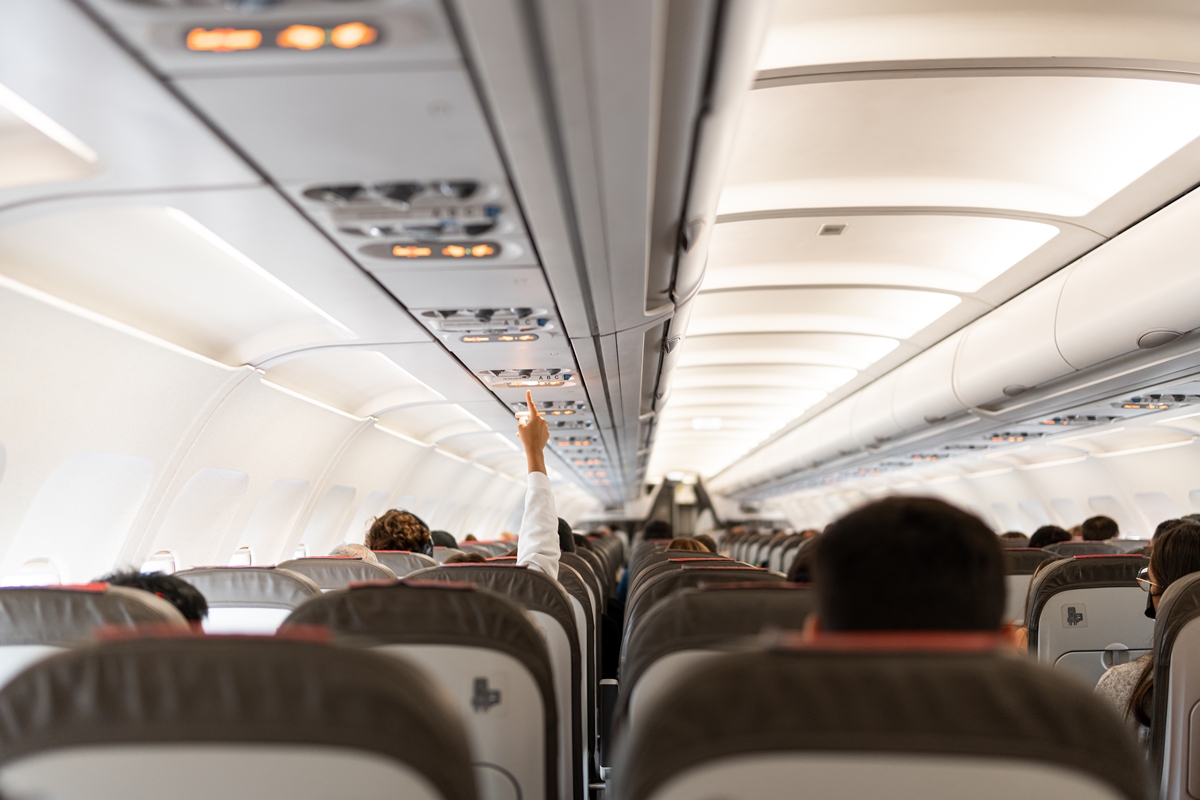
Bomb threats prompted inspections and flight diversions at airports across Europe on Tuesday, Nov. 3. No explosives were found in the reported incidents. (Foto: Instagram)
A series of bomb threats targeting commercial flights disrupted airport operations across Europe on Tuesday, Nov. 3, prompting security responses in Poland, Spain, Bulgaria and Italy. Aircraft were diverted or inspected, and one airport temporarily suspended operations. No explosives were found in the incidents reported.
In Poland, a LOT flight from London to Warsaw was diverted to Modlin Airport. The Boeing 737 MAX, carrying 181 people, landed safely and was taken to an isolated area for inspection. The airport temporarily halted operations while searches were conducted, then resumed them after the inspections.
A second aircraft, operated by Scandinavian Airlines (SAS) and arriving from Copenhagen, received a threat before landing at Warsaw Chopin Airport. It was inspected, but the airport’s operations were not interrupted for an extended period.
In Spain, a Ryanair flight traveling from Manchester, England, to Murcia received a bomb threat. The plane landed without incident, after which emergency crews, police and explosives experts inspected it. Authorities described the alert as false. In Bulgaria, a plane arriving from Israel landed in Sofia after a threat was sent by email. It was moved away from the terminal for examination by counterterrorism units. Officials did not identify the airline or the flight’s original destination.
Two Ryanair flights in Italy, one from Lisbon and the other from Dublin, received alerts and were inspected at Rome Fiumicino Airport. Italian Air Force fighter jets were deployed to accompany one of the aircraft. No suspicious devices were found.
The latest incidents followed another alert on Monday, Nov. 2, when a Wizz Air flight from London to Sofia was diverted to Budapest, Hungary. Hungarian fighter jets escorted it to landing. Authorities have not confirmed whether the cases are connected or identified those responsible for the threats. The alerts prompted airports and airlines to strengthen security procedures.

