
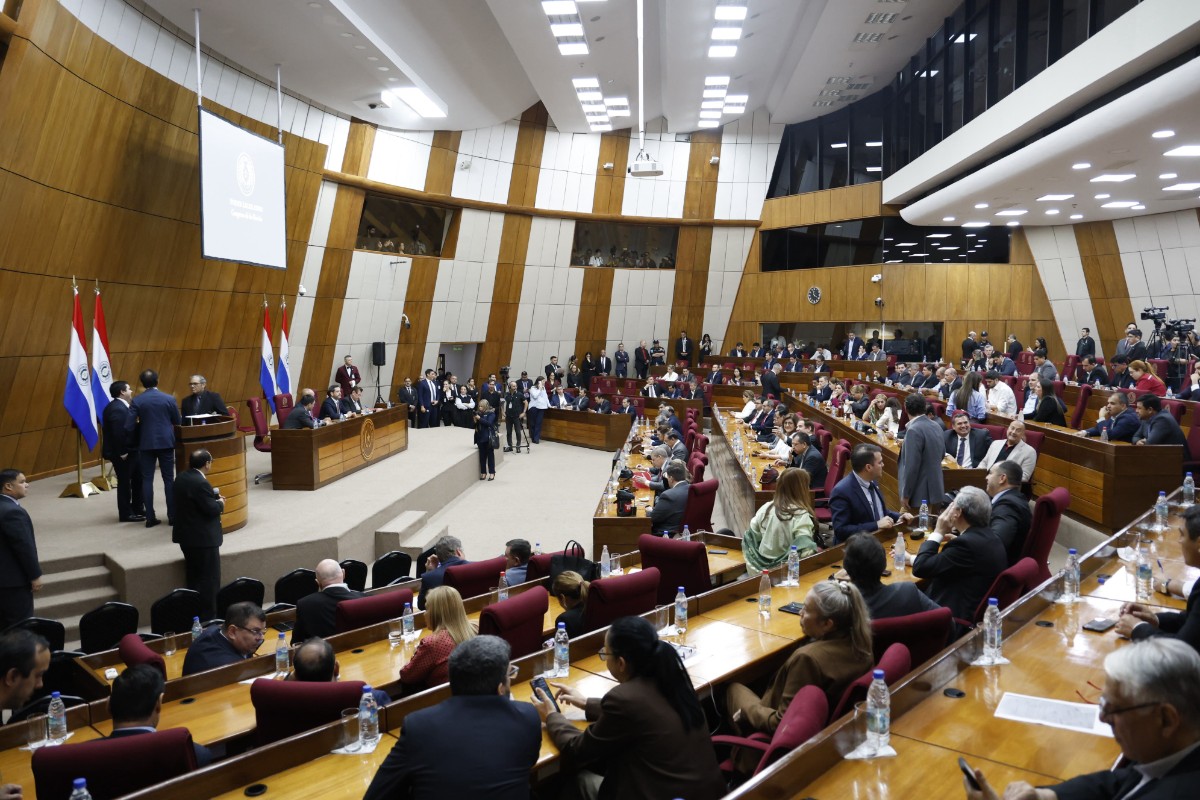
Paraguay’s Congress suspended a joint session on Nov. 5 after lawmakers from the governing bloc left, preventing a vote on President Santiago Peña’s resignation. (Foto: Instagram)
Paraguay’s Congress suspended a joint session on Thursday, Nov. 5, that had been called to consider President Santiago Peña’s resignation. The meeting stopped after lawmakers from the governing bloc left the chamber, leaving legislators without the quorum needed to vote on whether to accept the resignation.
Peña announced he would leave the presidency hours before the session, as an impeachment effort against him was gaining momentum. The political crisis followed the collapse of Ueno Bank, one of Paraguay’s major digital banks. On Nov. 3, the Central Bank of Paraguay suspended the bank’s operations and began a resolution process after identifying financial problems that threatened its ability to meet its obligations.
About an hour after Peña’s announcement, the Chamber of Deputies unanimously approved the impeachment request, with 78 votes in favor. The request had been filed by 35 lawmakers. Initially organized by opposition legislators, it gained support from members of Peña’s own Colorado Party. Opposition lawmakers urged Congress to continue the process, arguing that resignation could allow Peña to leave office and potentially gain parliamentary immunity.
During the debate, opponents also argued that Peña could take a seat as a lifetime senator after resigning, a status they said could shield him from possible criminal investigations. The resignation was formally submitted in a letter delivered to Congress by Interior Minister Enrique Riera. In a statement posted on social media, Peña said he had made the decision with the country’s stability, social peace and democratic institutions in mind.
Opposition Sen. Esperanza Martínez criticized lawmakers’ departure from the session in a post on X. She said senators and deputies aligned with the governing bloc had left because a majority was prepared to reject Peña’s resignation, and accused them of trying to prevent a vote. Martínez further alleged that the lawmakers sought to cover up wrongdoing and continue practices she linked to the financial crisis.
The impeachment allegations include conflicts of interest and alleged irregularities in the government’s handling of the financial crisis. Peña was a shareholder in the group that controls Ueno Bank until March 2025. The bank’s collapse and Peña’s past connection to its controlling group intensified political pressure on his government, though the claims against the president remain allegations.
The crisis also reached the leadership of Paraguay’s central bank. Carlos Carvallo, who had led the monetary authority since 2023, resigned. Before taking that position, he had served as president of Ueno Bank. His departure was among the changes at the central bank’s leadership that followed the bank’s suspension and the political turmoil surrounding Peña.

