
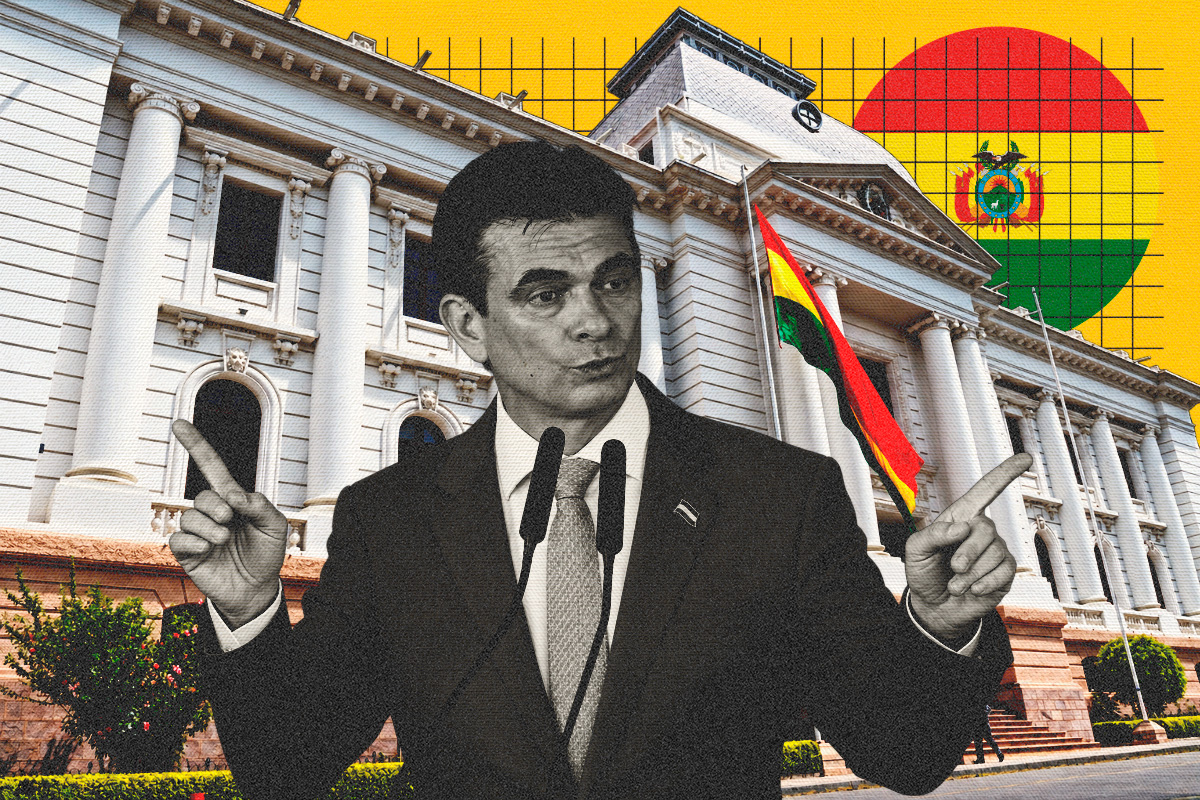
Bolivia’s government is facing growing tensions with the judiciary as investigations involving senior legal officials intensify. (Foto: Instagram)
The relationship between Bolivian President Rodrigo Paz’s government and the judiciary has reached its most strained point since he took office. In a matter of weeks, former Attorney General Roger Mariaca was arrested on suspicion of ties to drug trafficking, while Supreme Court of Justice President Romer Saucedo said he had left Bolivia with his family after receiving threats and fearing for his life. The cases have become central to the government’s argument for reforming the justice system.
Paz, who took office in November 2025, has said the current system does not provide sufficient guarantees to the public and that reform is needed to strengthen democracy and fight organized crime. The crisis intensified in early October with Mariaca’s arrest. The Bolivian government accuses him of favoring criminal organizations and protecting people involved in drug trafficking. His arrest came two days after the United States canceled his visa, along with those of other officials and businesspeople from Bolivia and neighboring countries. The Trump administration has accused Mariaca of taking bribes to facilitate drug trafficking and help criminals evade justice. Bolivian authorities are also investigating a possible connection to Uruguayan drug trafficker Sebastían Marset.
After Mariaca’s arrest, Bolivia’s Legislative Assembly approved legal changes that allowed him to be removed as head of the Public Prosecutor’s Office. Congress then appointed José Armando Urioste as interim attorney general. The operation resulted in the detention of 14 people suspected of involvement in a scheme to protect drug trafficking and engage in corruption. The government has presented the arrests as an effort to restore public confidence in institutions, while the speed of the legal changes used to remove Mariaca has also raised questions in Bolivia.
Saucedo said in a post on X that Paz’s administration was politically persecuting him and trying to fabricate evidence against him. His departure followed the Public Prosecutor’s Office’s announcement that it had issued an arrest warrant for him on suspicion of trafficking controlled substances and criminal association. The investigation remains under seal, and authorities have not confirmed his whereabouts. The government has linked his case to the investigation of Mariaca. Deputy Interior Minister Peter Maldonado said people connected to the former attorney general and to criminal activity were leaving the country. Saucedo denies wrongdoing and says he does not intend to resign from his judicial position, to which he was elected in 2024. The Supreme Court gave him six days to return; four days remained at the time of the report. Senior justice Rosmery Ruiz has taken over as acting court president.
The dispute is unfolding as the government pursues broader changes. In May, Paz announced plans to reform the justice system and Bolivia’s Constitution. A key issue is how judges on the highest courts are selected. Under the 2009 Constitution, they are chosen by popular vote after a selection stage conducted by the Legislative Assembly. The system was intended to increase public participation and reduce political influence over appointments, but critics point to low turnout, large numbers of blank and invalid ballots, and partisan disputes over candidates. The 2024 judicial elections were held only partially after court rulings blocked voting for some positions in certain departments. Several reform proposals were submitted to the Legislative Assembly in 2026; one would replace direct elections with a merit-based process involving civil society representatives and legislative approval. The proposals remain under discussion, with concerns about judicial independence and the possibility of increasing political influence over court decisions.
Bolivia’s closer relationship with the United States is another factor in the crisis. The Trump administration has supported operations targeting officials suspected of involvement in drug trafficking and expanded security cooperation with Bolivia. In March, Bolivia joined the Shield of the Americas, a Trump-led initiative to combat criminal organizations and international drug trafficking. Bolivian authorities describe the investigations as part of an effort to dismantle corruption and drug-trafficking networks they say have penetrated public institutions. With Mariaca’s arrest and Saucedo’s departure affecting two major parts of the justice system—the Public Prosecutor’s Office and the Supreme Court—the cases and the proposed reforms are likely to shape relations between the government and the judiciary in the coming months.

