
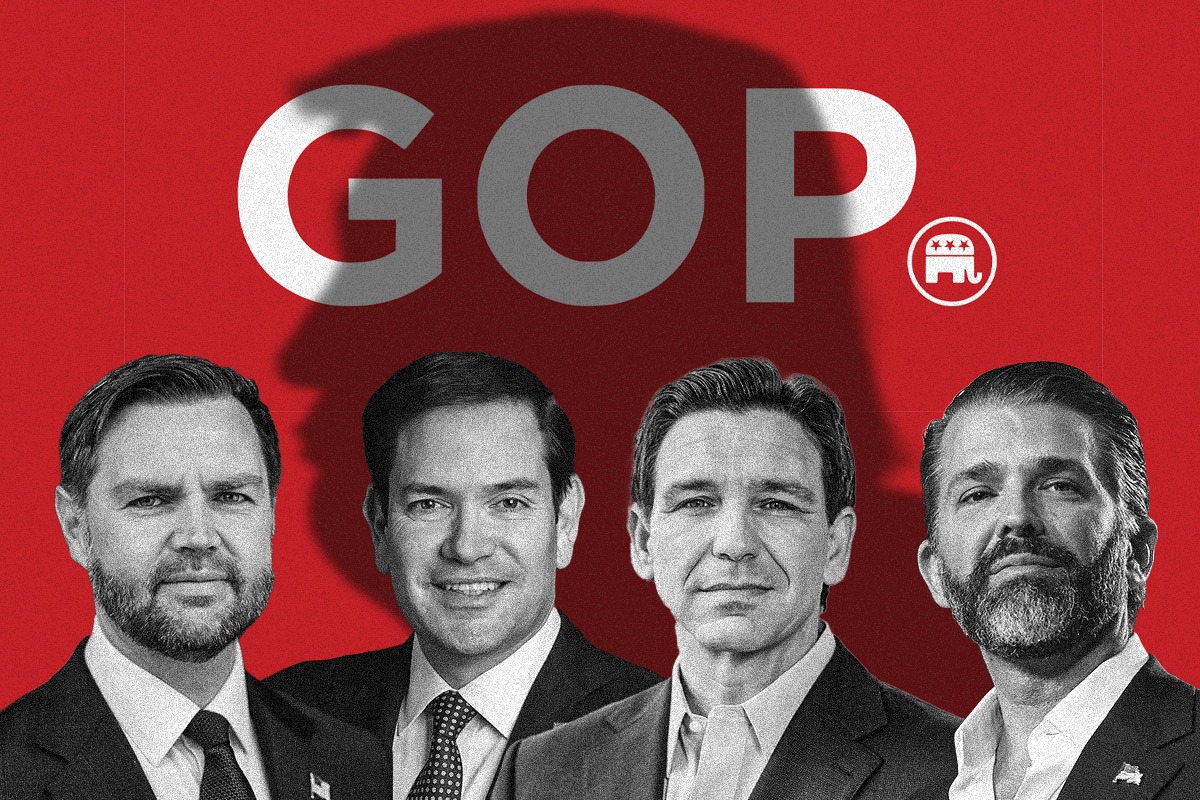
Republican losses in the midterm elections have weakened President Donald Trump’s standing and intensified questions about who will lead the party in 2028, including Vice President JD Vance. (Foto: Instagram)
The Republican Party’s defeat in the U.S. midterm elections has raised questions about President Donald Trump’s political strength and accelerated early maneuvering for the 2028 presidential contest. Democrats’ gains in both chambers of Congress have intensified internal tensions among Republicans and put Vice President JD Vance, previously viewed as Trump’s leading political successor, under pressure. Maurício Fronzaglia, a professor of international relations at Universidade Presbiteriana Mackenzie, said the result weakened both the presidency and Trump’s standing within his party. He described it as the largest midterm defeat for a party in 50 years.
Starting in January 2027, Democrats are expected to control the House and Senate, with between 254 and 259 seats in the House and 54 to 55 in the Senate. The new balance of power is expected to make it harder for Trump to advance his agenda during his final two years in office, increase congressional scrutiny of his administration and potentially create openings for investigations. Trump cannot seek a third term under the 22nd Amendment, adding urgency to the question of who might lead the party after him.
Vance’s position has been particularly affected. He had led early polling for the Republican presidential nomination in 2028, but after the election he blamed the party’s performance on the war with Iran, writing on social media, “The reason we lost was the war.” He also questioned whether continued military operations were worth the cost of losing the Senate for the next six years. Vance’s effort to distance himself from the war comes as he had publicly supported the intervention and campaigned alongside Republican candidates who lost. Asked about Vance possibly running in 2028, Trump replied, “Maybe he won’t run,” a remark that fueled speculation about the succession.
Fronzaglia said the election had brought forward the search for a viable successor who could retain some conservative voters without matching what he characterized as Trump’s level of radicalism. Republicans, he said, need to win back voters on the right and center-right who have left the party. He pointed to Democratic victories in traditionally Republican states such as Texas and Mississippi as signs of a shift that extends beyond closely contested swing states.
Other possible contenders mentioned for 2028 include Secretary of State Marco Rubio, Florida Gov. Ron DeSantis, Texas Sen. Ted Cruz and Donald Trump Jr., the president’s eldest son. Some Republicans see Rubio as a more institutional alternative, although he has avoided discussing electoral ambitions and says he intends to focus on diplomacy. DeSantis, who challenged Trump for the Republican nomination in 2024, criticized the party’s campaign strategy. He described the defeat as bringing Republicans close to extinction in some regions and cited the Iran war and rising fuel prices as sources of political damage. Cruz called the result a “beating” and questioned the effect of Trump’s tariffs on Americans’ cost of living.
Trump’s influence is not expected to disappear immediately. The Make America Great Again movement, built around him since 2016, retains a loyal base and remains a major force in the Republican Party. Fronzaglia said its ideas are likely to remain part of U.S. public debate amid what he described as entrenched emotional polarization in the United States and countries including Brazil, France, Italy, Spain and Germany. He argued that Republicans need to rely less on Trump personally and rebuild an identity of their own. The strategies of potential successors, including Vance and Rubio, may depend in part on Trump’s popularity: if it remains low, they could try to distance themselves from his legacy; if he regains support, they may take a different approach.

