
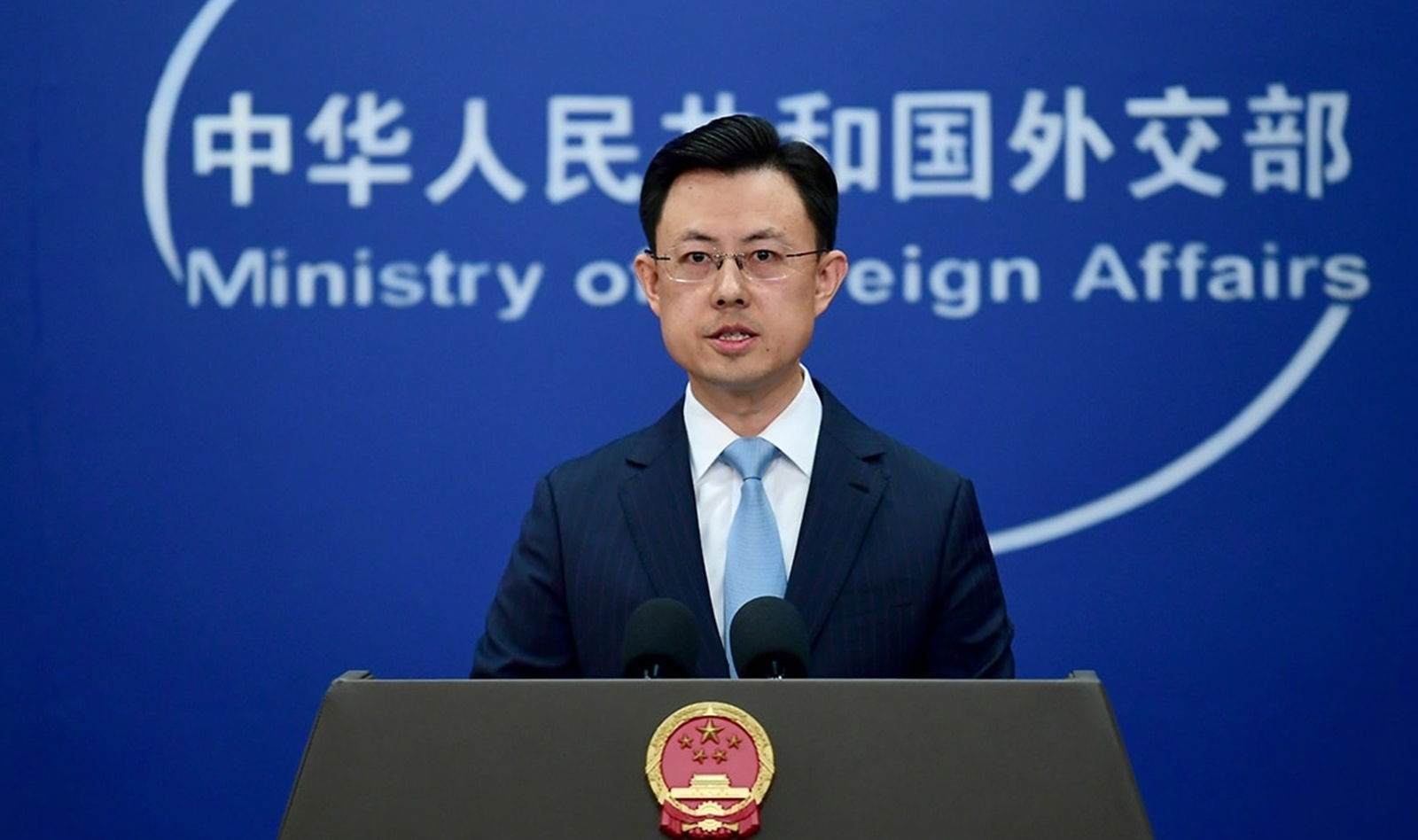
China’s Foreign Ministry spokesperson Guo Jiakun criticized new U.S. restrictions on artificial intelligence chip transfers at a news conference on Nov. 17. (Foto: Instagram)
Guo Jiakun, a spokesperson for China’s Ministry of Foreign Affairs, criticized new U.S. restrictions on artificial intelligence chips during a news conference Tuesday, Nov. 17. The rules govern the export, re-export or transfer of chips to data centers located outside the United States. “China will take the necessary measures to firmly safeguard its legitimate rights and interests,” Guo said.
Guo described the restrictions as economic coercion and an example of extraterritorial jurisdiction. He also accused the United States of repeatedly stretching the definition of national security, misusing export controls and interfering in China’s normal trade and technology cooperation with other countries. Those actions, he said, unfairly suppress the development of China’s high-tech industries.
The Trump administration announced the rule Monday, Nov. 16. It imposes controls on where AI chips are physically sent and on the computing capacity of data centers outside the United States. The measure is intended to prevent Chinese companies from using data center infrastructure in other countries to access the processing power of U.S. AI chips.
Brazil, Indonesia, Malaysia, Singapore and Thailand are among the countries where exporting or transferring the chips will now require a license. The new requirement does not bar Brazil from buying the components from the United States; it means that U.S. government authorization is needed. Under the rule, data centers that provide large amounts of computing capacity to Chinese companies must also receive U.S. authorization.
The text says the rule is designed to prevent existing restrictions on access to sensitive U.S. technology from being bypassed through remote-computing agreements involving data centers in third countries. Its requirements directly affect technology companies, cloud providers and foreign governments.

