
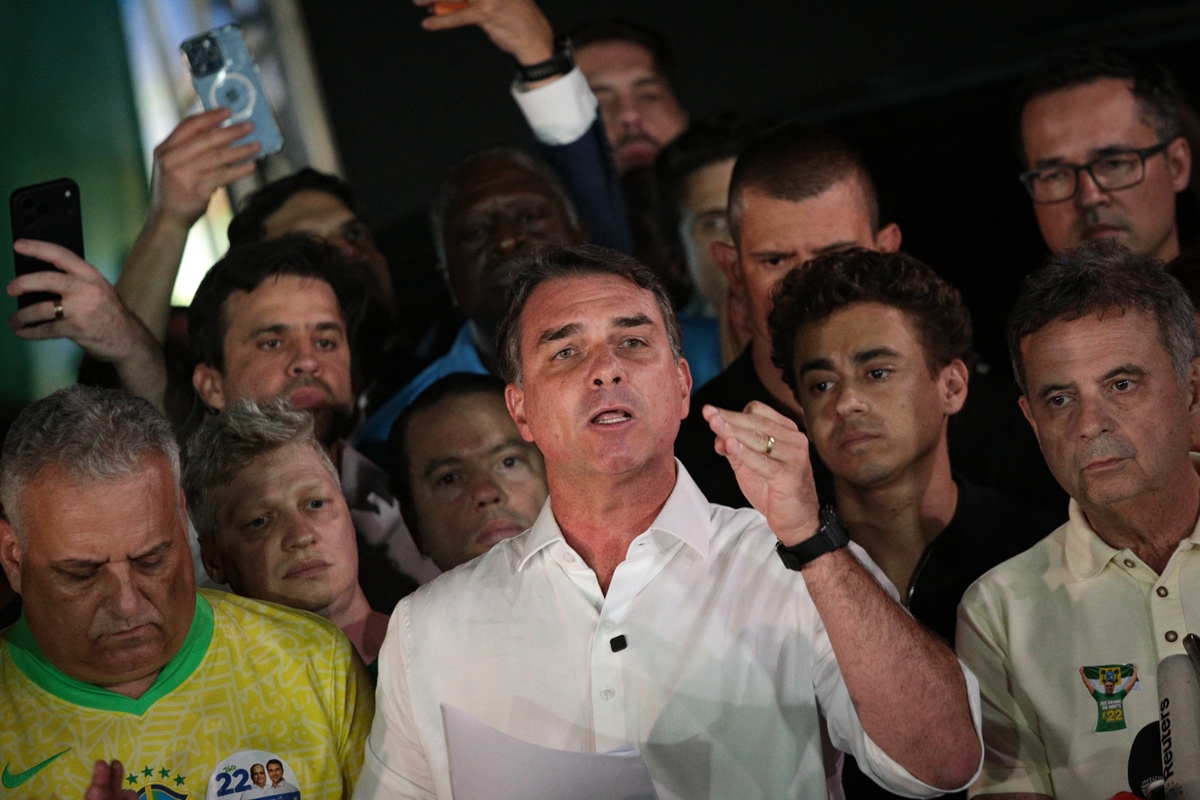
Sen. Flávio Bolsonaro criticized Supreme Court Justice Alexandre de Moraes after Moraes denied a request for former President Jair Bolsonaro to meet lawmakers at home. (Foto: Instagram)
Brazilian Sen. Flávio Bolsonaro criticized Supreme Federal Court Justice Alexandre de Moraes on Tuesday, Nov. 17, after Moraes rejected a request for former President Jair Bolsonaro to receive Sen. Rogério Marinho at home, where Bolsonaro is under house arrest. Marinho, a member of the Liberal Party (PL), is the party’s candidate for Senate president in February 2027.
Flávio said the decision reinforced what he described as political persecution of his father. “Our last line of defense is Congress, especially the Senate. That’s why the system is afraid of Rogério Marinho’s candidacy,” he said. Flávio, who is in the United States after leaving Brazil following his defeat in the presidential election, also disputed Moraes’ view that the proposed visits would allow Jair Bolsonaro to take part directly in efforts to secure the Senate presidency.
Flávio argued that the legal basis cited by Moraes concerned the suspension of political rights, including the right to vote or run for elected office, and did not bar Bolsonaro from expressing political opinions or meeting with lawmakers. He said Bolsonaro appeared to be the only Brazilian subject to such a restriction and called the measure “the death sentence of Bolsonaro’s citizenship.”
Moraes denied the request on Monday, Nov. 16. The defense had sought permission for Bolsonaro to meet with Valdemar Costa Neto, the Liberal Party’s national president, and senators Marinho and Tereza Cristina, of the Progressive Party (PP). Moraes said the proposed meetings had a clear political-party purpose.
In his ruling, Moraes said such meetings would be incompatible with the suspension of Bolsonaro’s political rights. Bolsonaro is serving a prison sentence of 27 years and three months for leading an attempted coup plot. Moraes also noted that the defense had not expressly explained the grounds for the three requested meetings.
The justice said the purpose of the meetings was widely known, asserting that they would involve Bolsonaro directly in coordinating, negotiating and making party-political decisions about a future candidate for Senate president. That reasoning was challenged by Flávio, who said the ruling improperly treated the suspension of political rights as a ban on political speech and visits from members of Congress.

