
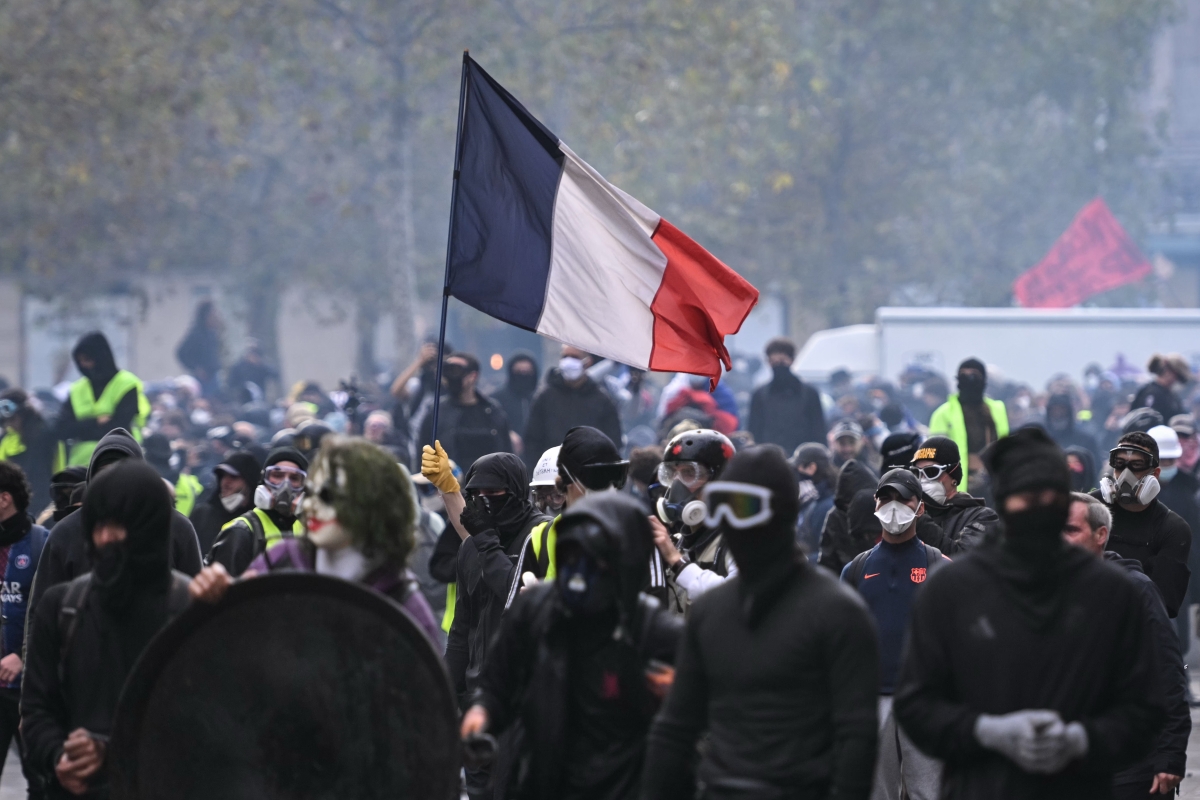
Demonstrators across France protested the rising cost of living and called for higher wages and better working conditions on Nov. 17. (Foto: Instagram)
More than 140,000 people marched in cities across France on Tuesday, Nov. 17, protesting the loss of purchasing power and demanding better working conditions. The demonstrations brought together high school and university students, retirees, and public- and private-sector employees. Unions called for higher wages and concrete government measures to address the rising cost of living.
Estimates of turnout differed sharply. Unions said more than 500,000 people demonstrated nationwide, including 175,000 in Paris. The Interior Ministry counted 146,000 participants, with 28,000 in the capital. Demonstrations were also held in Marseille, Toulouse, Lille, Lyon, Bordeaux, Strasbourg, La Rochelle, and Metz. In Marseille and Toulouse, local authorities estimated about 5,000 participants in each city, while unions put the figures at 80,000 and 20,000, respectively.
Participation was lower than at demonstrations on Nov. 5, and the effect on public services was limited. The French government said fewer than 3% of public employees joined the walkout, including workers at ministries, city governments, and university administrations. In the previous mobilization, the participation rate had reached nearly 10%.
Young people remained a prominent presence, with high school and university students taking part alongside student groups and youth labor organizations. Their involvement reflects concerns extending beyond wages, including employment prospects, education, public-service quality, and living conditions, according to the account of the protests.
In Paris, Sophie Binet, general secretary of the General Confederation of Labor (CGT), called for dialogue involving all groups in the movement, including private-sector workers, students, and public employees. She urged the government to present specific measures to address their demands. Binet said an effective response to workers’ concerns would be necessary to bring the repeated demonstrations to an end.
Union frustration has grown after the government again rejected a general pay raise for public employees. The decision came days after the government confirmed an increase in France’s minimum wage, known as the Smic, which applies to private-sector workers. Unions say the measures do not make up for public employees’ loss of purchasing power and have criticized the lack of a broader wage policy. They are seeking negotiations on pay and working conditions.
The protests are unfolding as the government faces the challenge of passing the 2027 budget, which includes measures aimed at reducing the public deficit. At the same time, it faces public discontent and criticism over cuts and limits on investment in public services. The continuing mobilizations underscore Prime Minister Sébastien Lecornu’s difficulty in reaching an agreement with unions and addressing dissatisfaction across different parts of society. Unions say they intend to keep up pressure until the government offers concrete responses.

