
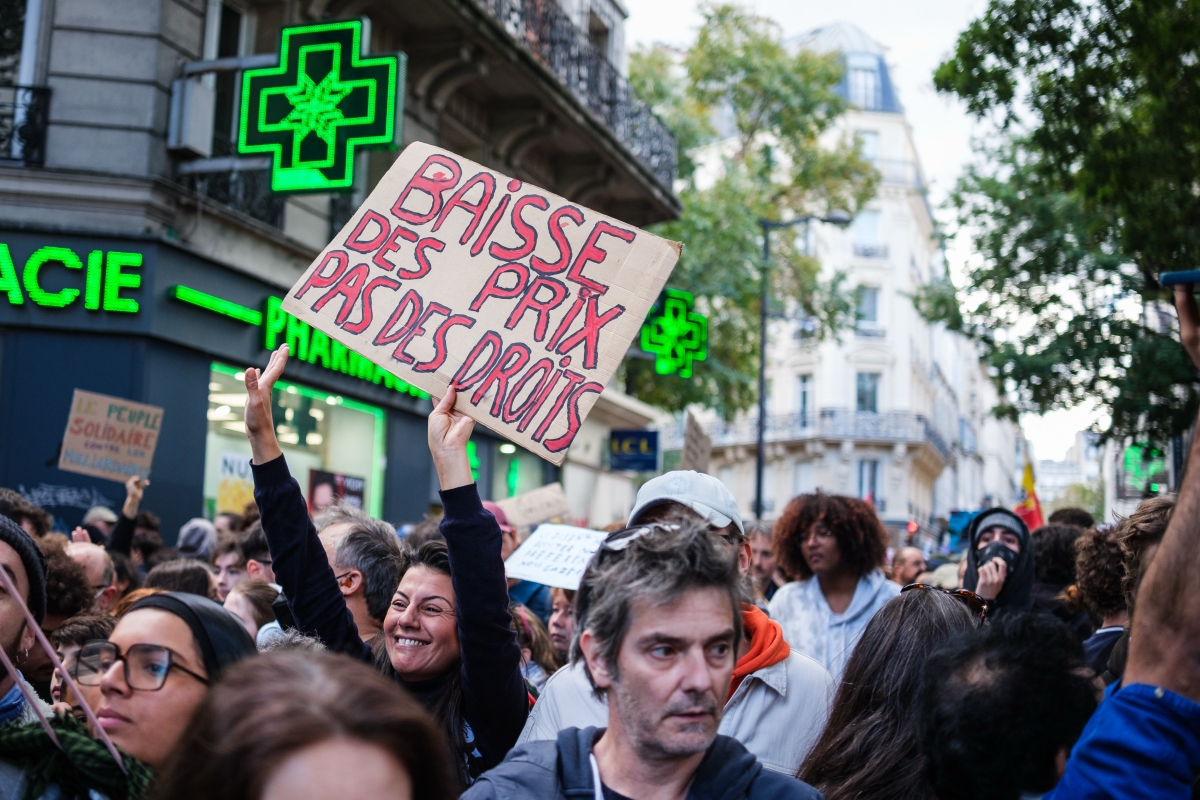
France deployed about 70,000 police officers and military personnel nationwide as protests over the rising cost of living entered a sixth consecutive weekend on Nov. 21. (Foto: Instagram)
France’s government deployed about 70,000 police officers and military personnel across the country on Saturday, Nov. 21, as social movements staged protests against the rising cost of living for a sixth consecutive weekend. The demonstrations coincided with the eighth anniversary of the Yellow Vest protests, which began in 2018.
A total of 167 actions were scheduled nationwide. In Paris, unions, students and activists planned a march beginning at 2 p.m. between Place de la République and Place de la Nation. Interior Minister Laurent Nuñez told mayors in a written notice and said in an interview with BFMTV that security forces would not “let their guard down” amid concerns that the protest movement could regain momentum. At a Nov. 14 demonstration, attendance was estimated at 106,000 by official figures and 200,000 by organizers. Similar calls to protest in other European countries have also helped fuel the mobilization.
The security deployment is intended to prevent a repeat of disturbances on Oct. 17 and 18, which caused more than 200 million euros in losses for French insurers. Nuñez called for heightened attention to the potential radicalization of demonstrations at schools and universities, as well as to groups hostile to police. The warning comes as lawmakers debate a recently approved bill that expands the presumption of self-defense for security personnel.
Authorities have also banned sales of certain fireworks through Nov. 27 as a preventive measure. About 6,000 fireworks shots directed at police have been recorded since mid-October, while the use of the devices has increased in and around high schools, according to the report.
Authorities and press organizations have warned of rising hostility toward journalists ahead of the demonstrations. Martin Ajdari, head of France’s audiovisual regulator, Arcom, described the level of assaults and intimidation faced by journalists in the streets, studios and newsrooms as both “concerning” and “unprecedented.” He said some crews have had to hire private security and conceal their names or faces to do their work.
Reporters Without Borders said 74 media workers have faced obstacles to their coverage since the protest wave began, including 47 cases of physical violence. The organization attributed 31 of those cases to security forces; protesters have also attacked journalists, particularly those working for 24-hour news channels. In Lyon, prosecutors opened an investigation into group violence after a BFMTV crew was assaulted the previous weekend.
Radio France President Sibyle Veil called for the Penal Code to make crimes against journalists subject to aggravating circumstances, giving them legal protections comparable to those for police officers, judges, teachers and health care workers. She said protecting reporters in the field is essential to their work as “craftspeople of democracy” and to the public’s right to information.

