
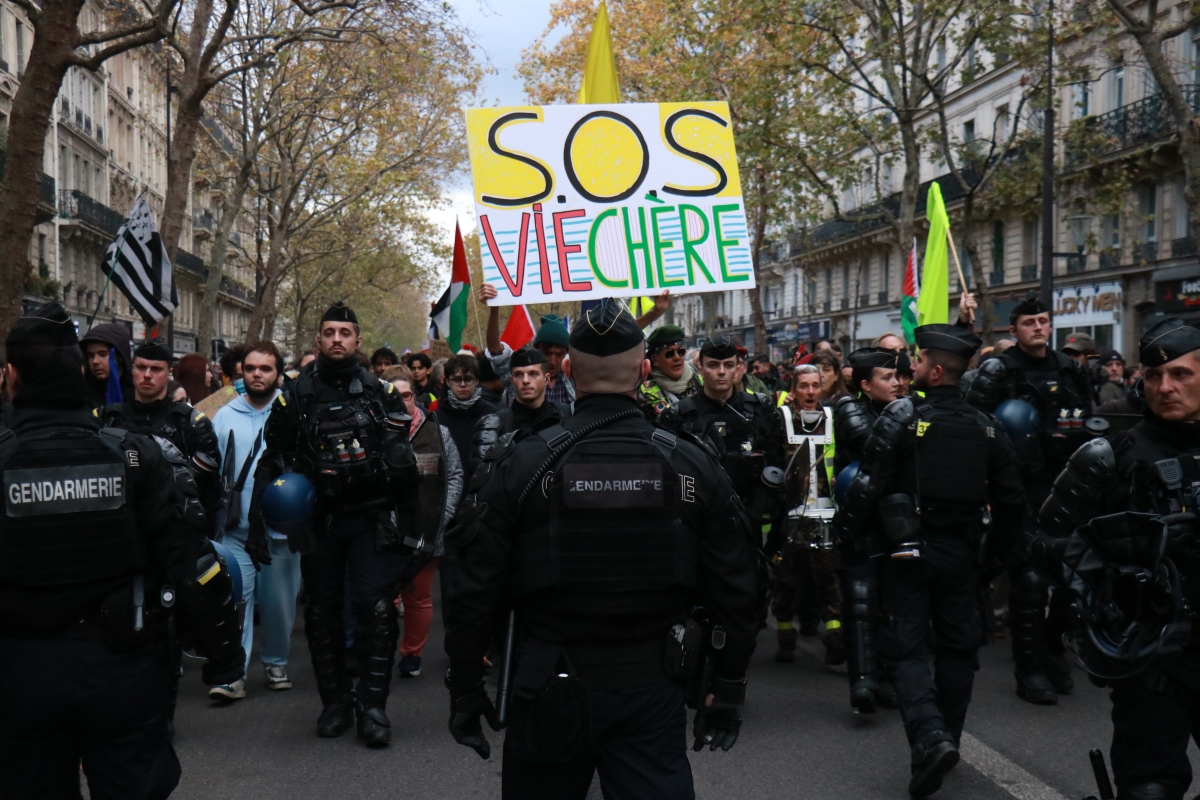
Demonstrators in France, Portugal, Spain, and Croatia protested on Nov. 21, 2026, calling for better working conditions, affordable housing, and stronger public services. (Foto: Instagram)
Thousands of people took to the streets in France, Portugal, Spain and Croatia on Saturday, Nov. 21, 2026. Demonstrators called for better working conditions, relief from the rising cost of living, more affordable housing and greater investment in public services. The protests took place over the same weekend but were not part of a single coordinated mobilization.
Unions, students and social movements organized separate demonstrations, each focused on national concerns. In Portugal, thousands of workers marched through Lisbon despite heavy rain. The Portuguese General Confederation of Workers (CGTP) called the march to demand higher wages and retirement benefits, lower prices for essential goods and measures to make housing more accessible.
In France, Yellow Vest movement participants joined students and union members in demonstrations focused on living costs and education. Protesters also criticized police violence. The Interior Ministry estimated that 82,500 people took part nationwide, while organizers put the turnout at 150,000. The two figures reflect separate estimates of the crowds.
In Spain, police said about 3,000 people demonstrated in Barcelona, where protesters sought more affordable housing, education funding and improved public services. A separate demonstration in Madrid called for justice over the deaths of older people in care facilities during the COVID-19 pandemic. In Croatia, thousands gathered in the capital, Zagreb, to protest the death of a man at a psychiatric hospital. Four health care workers are under investigation in connection with the case.
The Saturday demonstrations followed an international mobilization on Friday, Nov. 20, involving students and young workers. Organizers announced protests in at least 25 countries and about 400 cities. Under the slogan “Fight for our future, not their wars,” participants opposed rising military spending and urged greater investment in education, social assistance and efforts to address the climate crisis. Some also protested the possibility that European countries could bring back mandatory military service. In Germany, thousands joined demonstrations against increased defense spending and the prospect of compulsory military service.
Italy also saw major labor action on Friday, when a general strike called by the Italian General Confederation of Labor (CGIL) affected public and private sectors, including schools and health services. Workers demanded wage increases, more investment in public services and changes to the economic policies of Prime Minister Giorgia Meloni’s government. Union leader Maurizio Landini said more than 1 million people took part in demonstrations across more than 100 Italian cities.

