
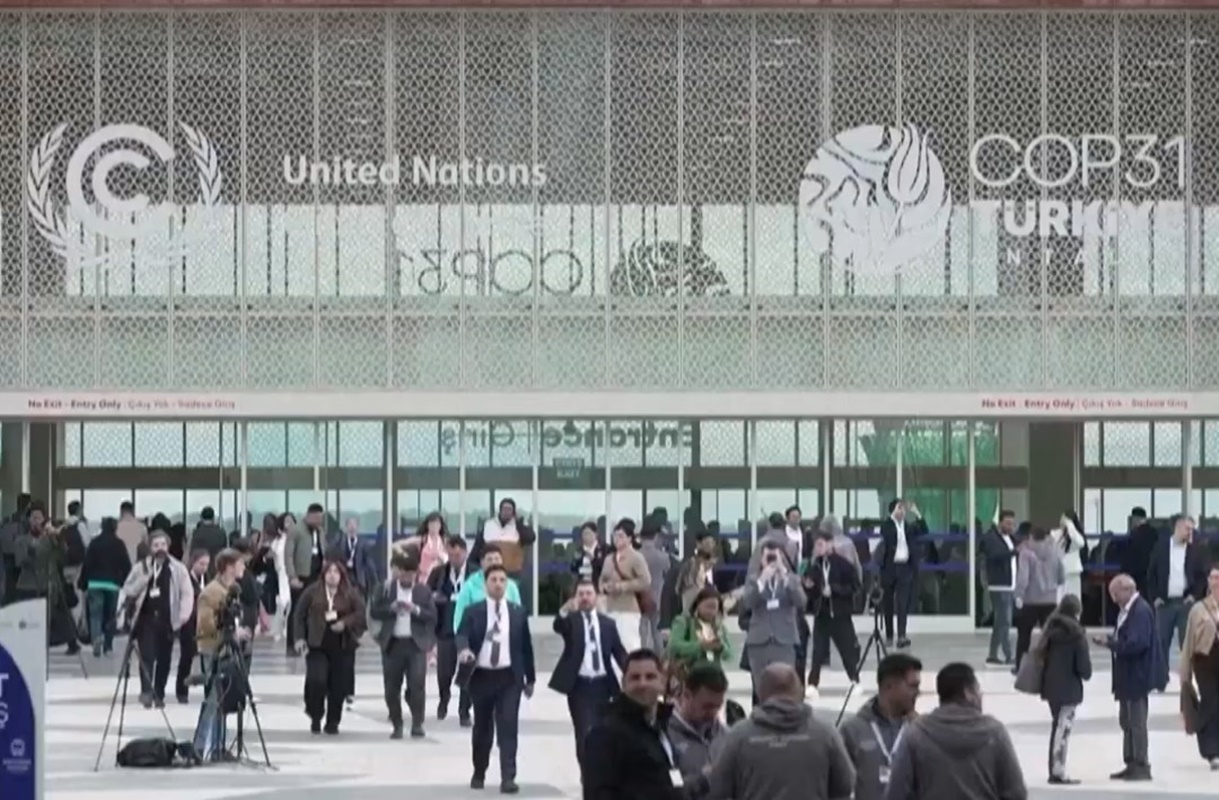
COP31 negotiations in Antalya, Turkey, ended without consensus on Sunday, Nov. 22, after countries rejected a proposed final agreement. (Foto: Instagram)
COP31’s leadership rejected a proposed final agreement on Sunday, Nov. 22, after negotiations in Antalya, Turkey, failed to produce consensus among about 200 participating countries. The draft, presented overnight by the Turkish and Australian presidencies after more than two weeks of talks, did not explicitly call for abandoning fossil fuels. The conference had become the longest climate summit in U.N. history, surpassing the record set by COP25 in Madrid in 2019.
“Many in this room clearly oppose this text, and there is no consensus on this document. Therefore, these decisions have not been adopted,” COP31 President Murat Kurum, Turkey’s environment minister, said during the closing plenary. The session’s start time had been changed twice during the day, and several dissatisfied negotiators had already left. Because U.N. climate summit decisions require unanimity, formal opposition led by the European Union and joined by Panama was enough to block the proposal.
Ireland’s Environment Minister Darragh O’Brien, speaking on behalf of the EU’s rotating presidency, said the bloc would not approve a text that failed to mention what he called the main cause of climate change. He accused the conference of being “held hostage by oil-producing states.” Earlier, France’s minister for ecological transition, Monique Barbut, described the draft as an “unacceptable” retreat that fell short of the urgency of the climate crisis. Greenpeace delegation chief Jasper Inventor said ambition had been reduced under pressure from the fossil fuel industry and argued it was preferable to end the summit without a deal than to accept an agreement built on “misleading and dangerous strategies.”
Brazilian climate policy specialist Stela Herschmann, of the Climate Observatory, called the document a “disaster.” She criticized its emphasis on electrification without guarantees that electricity would come from renewable sources or that adequate funding would be provided. The rejected draft avoided a direct call to phase out coal, oil and fossil gas, a demand backed by countries in the Pacific, Europe and Latin America but opposed by major producers led by Saudi Arabia. Instead, it made a limited reference to the 2023 COP28 agreement in Dubai and proposed accelerating carbon capture, utilization and storage technologies, which oil companies support. It also included a Turkish target to increase electricity’s share of global energy consumption to 35% by 2035.
Climate finance for developing countries was another major point of contention in Antalya. Before the conference began, European countries had indicated they would not increase their contributions and would meet only existing commitments. As a result, the draft set no specific funding amounts for the most vulnerable nations, promising instead further negotiations and a future roadmap for unlocking resources.
The text also addressed when the Intergovernmental Panel on Climate Change would publish its next reports. It highlighted the reports’ relevance to the next global emissions stocktake, scheduled for 2028. India and Saudi Arabia were among the countries pressing to delay publication until 2029, a move that would reduce the assessments’ influence in the U.N.’s official process. The draft reaffirmed the importance of limiting global warming to 1.5 degrees Celsius above preindustrial levels, a central concern for small island states threatened by rising seas, but was deemed insufficient amid its limited energy transition commitments and lack of financial guarantees. The summit ended without a consensus declaration, leaving future multilateral negotiations to address the divisions over fossil fuels, climate ambition and financing.

