
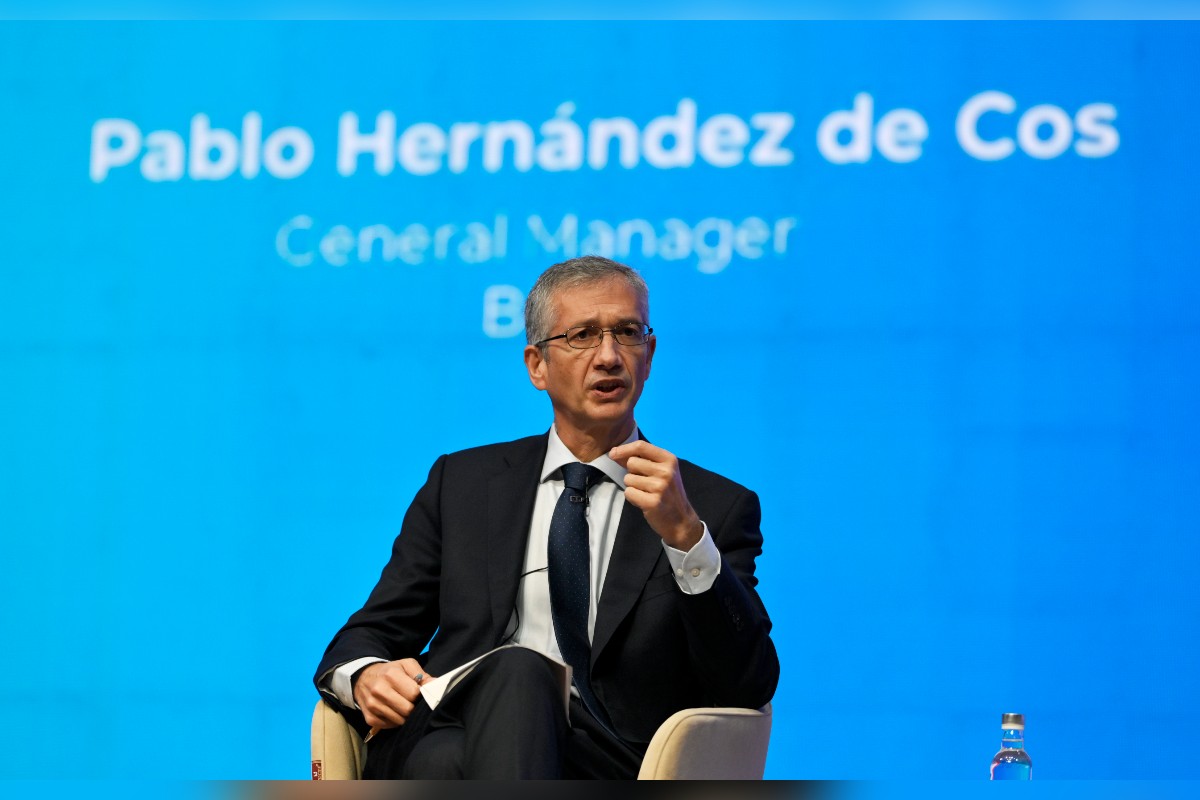
Pablo Hernández de Cos was selected to lead the European Central Bank, succeeding Christine Lagarde, who is set to leave the position on February 7, 2027. (Foto: Instagram)
Euro-area countries chose Spanish economist Pablo Hernández de Cos on Thursday, Nov. 26, to become president of the European Central Bank. He is set to replace Christine Lagarde, who will leave the position early on Feb. 7, 2027. Hernández de Cos is expected to lead his first monetary policy meeting on March 18.
The selection followed months of negotiations among major European Union countries over the leadership of the monetary authority. Reuters reported that Hernández de Cos’s nomination signals an inclination to maintain continuity in the bloc’s monetary policy. The decision gained momentum after the Netherlands withdrew its candidate, Klaas Knot, the former head of the Dutch central bank, and backed the Spanish economist.
Hernández de Cos previously led the Bank of Spain and is currently general manager of the Bank for International Settlements, known as the BIS. At 55, he is an economist specializing in monetary policy. Earlier in his career, he worked in several areas of both the European Central Bank and the Bank of Spain before becoming head of Spain’s monetary authority.
His appointment comes as Europe faces renewed economic pressure. The ECB is monitoring a fresh acceleration in inflation, which the article attributes to the war in Iran, as well as the potential effects of political instability in France on financial markets in other euro-area countries. The choice also adds to expectations that the central bank will remain prepared for a possible new sovereign debt crisis in the region.
Hernández de Cos is considered close to Mario Draghi, the ECB’s former president, who became known for his role during the European debt crisis. During his tenure at the Bank of Spain, Hernández de Cos dealt with economic upheaval that included the rescue of the country’s banking system, the COVID-19 pandemic and the sharp rise in inflation after the health crisis.
Central bankers from southern Europe are often associated with favoring lower interest rates, but colleagues and ECB observers regard Hernández de Cos as a moderate who does not necessarily fit that profile. Meanwhile, price pressures have led ECB officials to indicate that another interest rate increase in December is nearly inevitable. Financial markets, however, are pricing in just one more increase, taking into account the recent decline in oil prices and the possibility that inflation could slow beginning in the European spring. That outlook also reflects a statistical effect: When large price increases from the previous year fall out of the year-over-year comparison, the inflation rate can decline even if prices remain high.

