
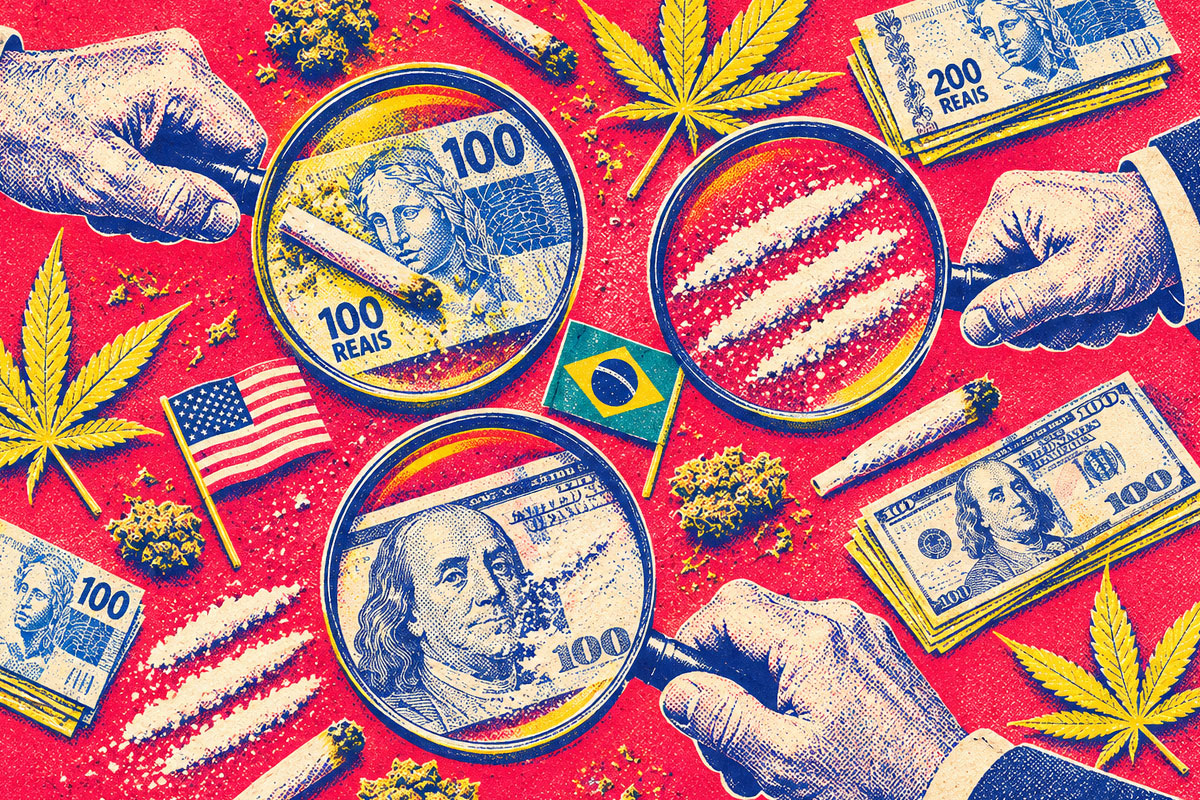
Federal Reserve Vice Chair for Supervision Michelle Bowman called for closer U.S.-Brazil cooperation to combat money laundering, drug trafficking and other cross-border crime at an international meeting in Brasília on Nov. 27. (Foto: Instagram)
Federal Reserve Vice Chair for Supervision Michelle Bowman said financial authorities in the United States and Brazil should work together against money laundering, drug trafficking and other cross-border criminal activity. She spoke Friday, Nov. 27, at an international meeting in Brasília, where she warned that financial integration can help spread risks across countries as well as support economic development.
Bowman said closer links among banking and financial systems create channels for fraud, money laundering and illicit financial networks tied to transnational criminal organizations. “Financial institutions and supervisors must address threats arising from money laundering, fraud, illicit financial networks and transnational criminal organizations,” she said. The meeting was held in partnership with the Central Bank of Brazil, the Association of Supervisors of Banks of the Americas, the Basel Committee on Banking Supervision and the Financial Stability Institute.
Although Bowman discussed transnational criminal organizations, she did not name Brazil’s Primeiro Comando da Capital, known as PCC, or Comando Vermelho, known as CV. The Trump administration has classified the Brazilian groups as foreign terrorist organizations since June 2026, a move opposed by the Brazilian government.
The discussion comes amid differences between Brasília and Washington over how to combat criminal groups operating in Brazil and elsewhere in Latin America. Brazil favors police cooperation, information sharing and efforts to disrupt the groups’ financing. The United States has used measures including the terrorist-organization designations for PCC and CV. President Luiz Inácio Lula da Silva has presented President Donald Trump with proposals to expand bilateral cooperation against transnational organized crime; according to published information, Washington had not yet provided a concrete response.
The dispute also touches on the effects of U.S. measures on Brazil’s financial system and national sovereignty, as well as the practical mechanisms for cooperation. The United States uses tools to identify and sanction networks moving illicit funds, including actions targeting financial structures linked to criminal organizations. Washington has urged other countries to strengthen systems for tracing and freezing assets and to cooperate in disrupting criminal financing—an approach that puts pressure on partners such as Brazil to expand their capabilities.
Bowman called for financial supervisors across the Americas to deepen cooperation through exchanges of information, experience and technical expertise. She said economic and banking connections can transmit risks across borders, with consequences for institutions and communities in different parts of the region. Established communication channels among national authorities, she added, can help coordinate responses to financial crises and threats involving cross-border operations. Bowman cited the Association of Supervisors of Banks of the Americas as a forum that can support practical exchanges, build institutional capacity and help authorities respond to shared challenges.
She also argued that bank supervision should be more effective and able to address significant risks promptly. Identifying problems is not enough, she said, if supervisors cannot require timely corrective action; overly bureaucratic processes, unclear responsibilities and decision-making structures can hinder that work. Bowman pointed to the March 2023 collapse of Silicon Valley Bank in the United States, saying supervisors had identified vulnerabilities before the failure but did not take sufficient steps to address the problems that contributed to it. She said supervision should be judged not by the number of inspections, reports or opinions produced, but by whether authorities can identify, reduce and correct risks before they cause more serious consequences.

