
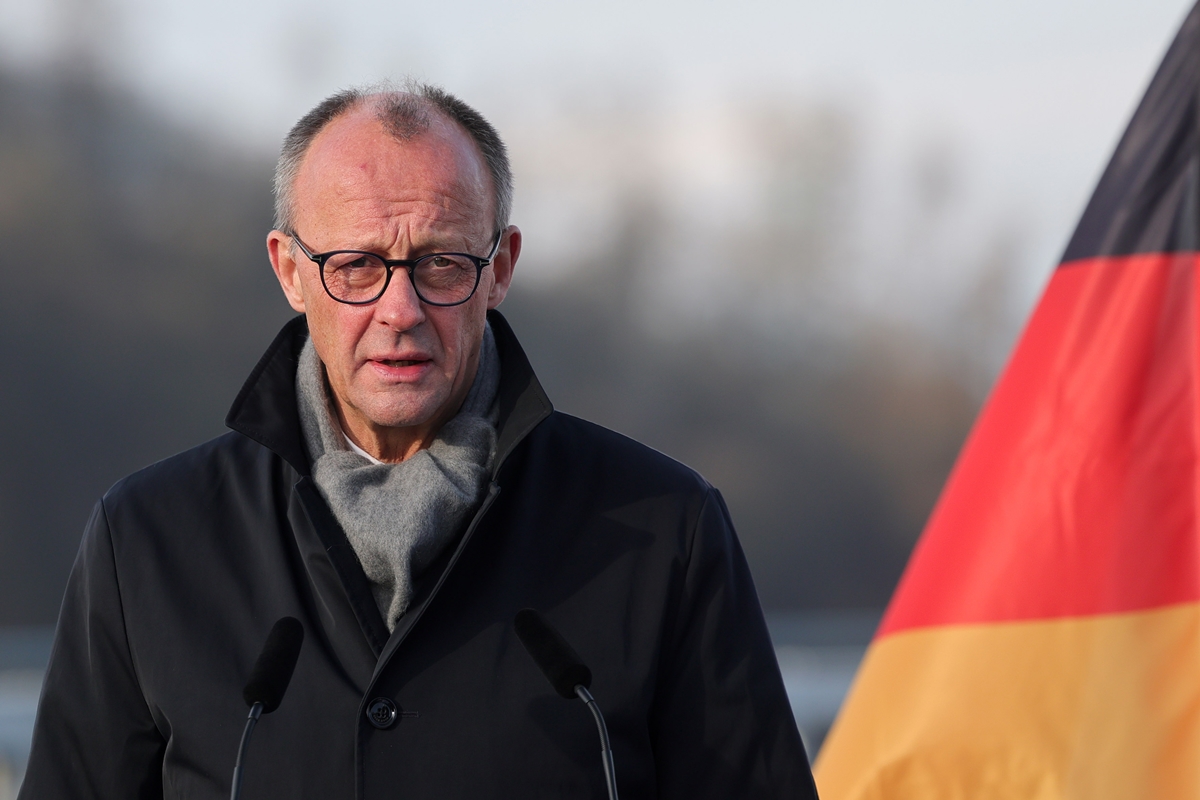
German Chancellor Friedrich Merz says he wants a woman to become Germany’s next president, the first in the country’s history. (Foto: Instagram)
German Chancellor Friedrich Merz said he wants a woman to become Germany’s president for the first time. He made the statement Monday, Nov. 2, during a closed-door meeting in Berlin with leaders of his party, the Christian Democratic Union (CDU). According to accounts of the meeting reported by German media, Merz said his position was settled on one point: the next president should be a woman. He also said he plans to present the CDU with a consensus candidate associated with the political center.
The selection process comes amid growing calls for a woman to succeed Frank-Walter Steinmeier, who has held the largely representative office since 2017 and cannot seek a third consecutive term. The presidential election is scheduled for Jan. 30, 2027, and the new president is expected to take office in March.
Merz argues that the CDU, as the largest force in the Federal Convention, should have the right to nominate the conservative bloc’s candidate. The convention elects the president. His position differs from that of the Christian Social Union (CSU), the CDU’s allied party in Bavaria, which has put forward Ilse Aigner, president of the Bavarian state parliament.
Aigner is viewed as someone able to work across party lines and has support from members of the Social Democratic Party (SPD) and the Greens. Potential candidates within the CDU include Bundestag President Julia Klöckner, Education Minister Karin Prien, former Defense Minister Annegret Kramp-Karrenbauer and Ines Claus, leader of the Christian Democrats’ parliamentary group in Hesse. The party’s leading bodies are due to meet again on Nov. 9, when discussions about a choice could begin. Merz plans to speak with regional leaders of both the CDU and CSU before then.
Former Chancellor Angela Merkel has also recently voiced support for the possibility of a woman becoming president. In an interview with MagentaTV, she said Germany should ask whether the time had finally come for a woman to hold the office. All presidents of the Federal Republic of Germany during its 77-year history have been men.
Although the presidency is primarily representative, the head of state has important institutional duties, including signing laws and treaties and formally appointing ministers. The Federal Convention that will choose Steinmeier’s successor will have 1,260 members: all 630 members of the Bundestag and 630 representatives appointed by Germany’s 16 states.

