
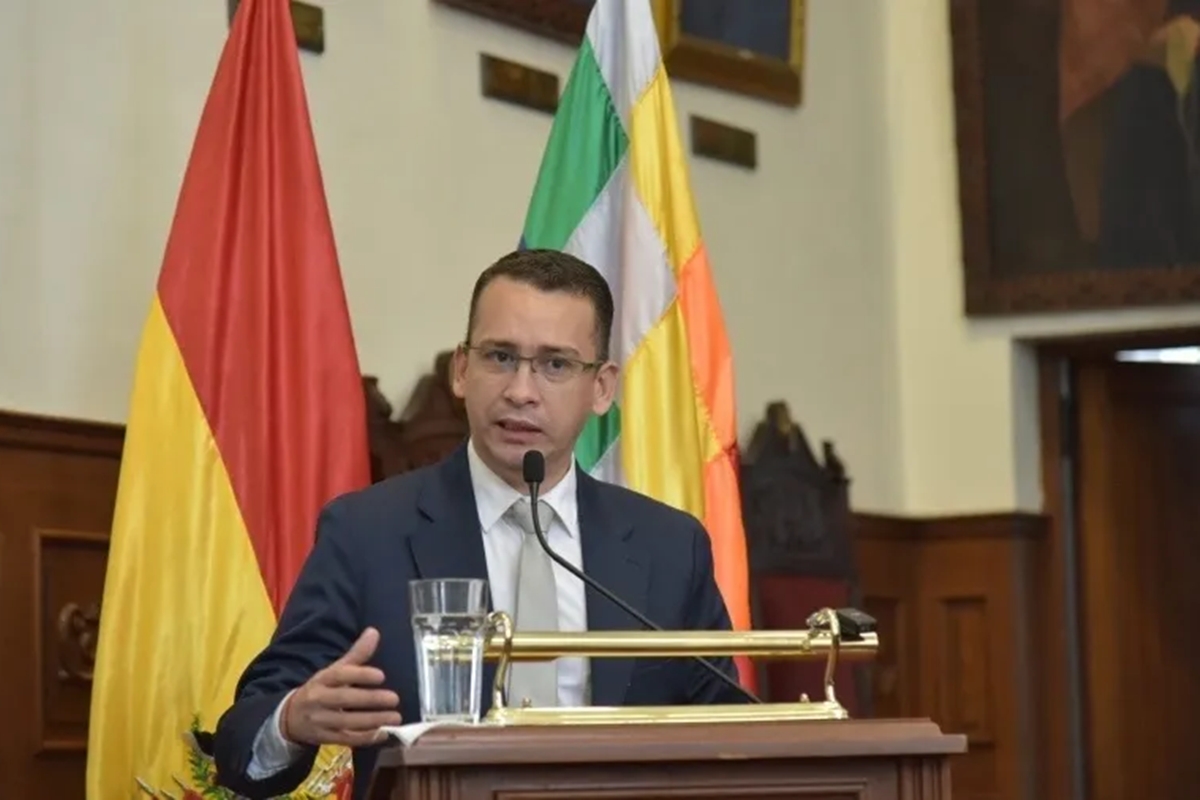
Bolivia’s Supreme Court President Romer Saucedo said he left the country after receiving death threats, as authorities pursued an arrest warrant over allegations of drug trafficking and criminal association. (Foto: Instagram)
Romer Saucedo, 38, president of Bolivia’s Supreme Court of Justice, said Nov. 5 that he had left the country after receiving death threats and fearing for his family’s safety. His reported departure comes as he faces at least two criminal investigations, including one into alleged trafficking of controlled substances and criminal association. Saucedo has accused President Rodrigo Paz’s center-right government of politically targeting him. Authorities have not confirmed that he left Bolivia.
Interim Attorney General José Armando Urioste said a warrant for Saucedo’s arrest was issued Wednesday, Nov. 4, on the trafficking and criminal-association allegations. Urioste said his office would ask Interpol to issue a red notice to help locate the judge. He did not describe Saucedo’s alleged role in the crimes, saying the investigations are confidential and involve protected witnesses.
In a post on X, Saucedo said he feared being arrested or killed for challenging political interests. He pointed to the April shooting death in Santa Cruz of Víctor Hugo Claure, a judge on the Agro-Environmental Court. Saucedo wrote that Claure was killed after affecting the interests of corrupt people and said he did not want to suffer the same fate. He also alleged that authorities were building a case against him with false accounts and fabricated evidence, claims that have not been established.
Saucedo said he did not intend to resign and planned to return when he and his family were safe. He alleged the government had already arranged for someone to take over his duties, and declared that he would not give up the position he said voters in Santa Cruz had awarded him. In his post, he said he received more than 740,000 votes and was the most-voted candidate nationwide for the court. The Supreme Court said it would wait six days for him to return before selecting a new president. During that period, senior judge Rosmery Ruiz will perform the role; Saucedo could lose his position if he does not appear within the deadline.
The case is unfolding alongside a series of operations targeting members of Bolivia’s judicial system. Since October, senior officials have been detained on suspicion of involvement in drug trafficking. Among them is former Attorney General Roger Mariaca, who was arrested after the United States canceled the visas of Mariaca and other officials and businesspeople from Bolivia, Colombia, Peru and Ecuador. The U.S. government accuses Mariaca of taking bribes to facilitate drug trafficking and help violent criminals evade justice. Bolivia’s Deputy Interior Minister Peter Maldonado linked Saucedo’s reported departure to the Mariaca case, saying that many of Mariaca’s alleged accomplices and people involved in criminal activity were fleeing.
Urioste said migration records showed Saucedo entered Bolivia on Tuesday, Nov. 3, but contained no record of a later departure. Authorities’ leading theory, he said, was that the judge had crossed the border by land. Paz also addressed the case Wednesday at a business meeting in Spain, saying Saucedo had left amid a series of accusations and investigations involving Bolivia’s judicial system. Saucedo became Supreme Court president in January 2025 and supported Paz government initiatives to increase institutional transparency. He has also acknowledged a friendship with Nadia Beller, a former congressional candidate who survived an assassination attempt in August and accused a former presidential aide of involvement in the attack.

