
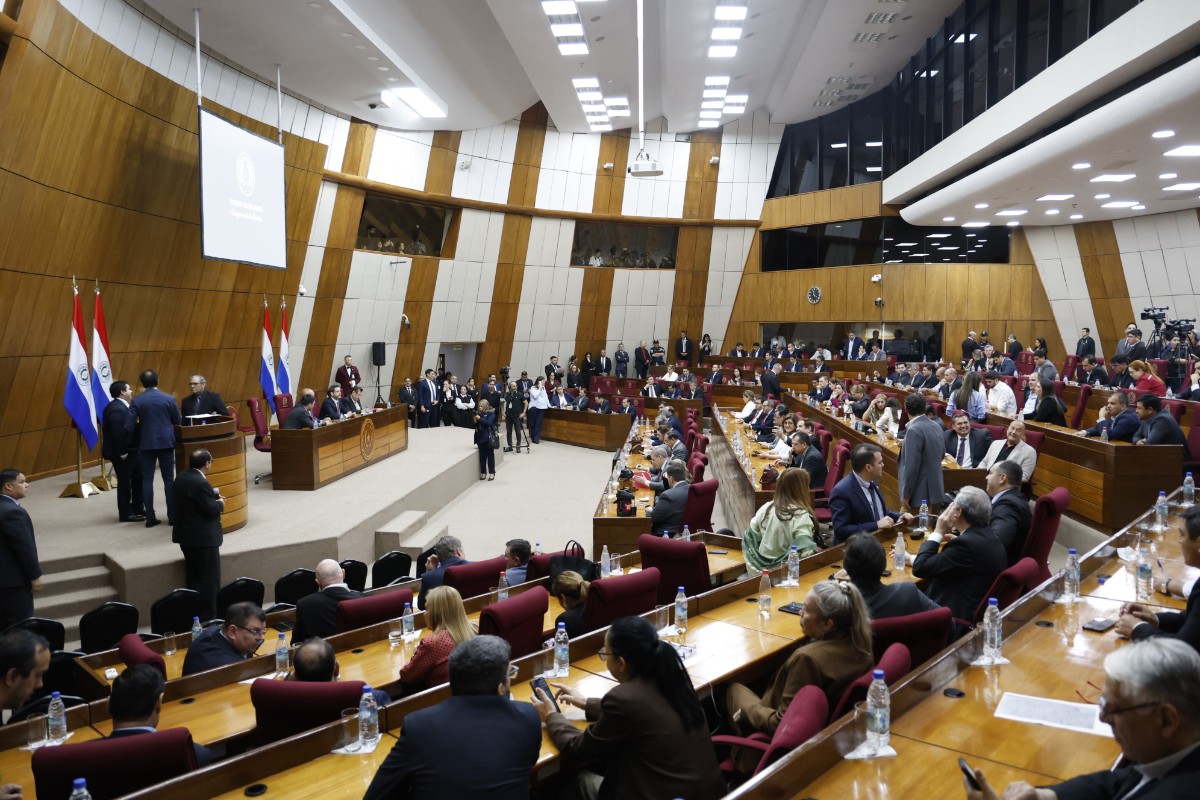
Paraguay’s Congress convened an extraordinary session to consider President Santiago Peña’s request to resign, amid a banking crisis at Banco Ueno. (Foto: Instagram)
Paraguay’s Congress convened an extraordinary session Thursday, Nov. 5, to consider President Santiago Peña’s resignation request. If lawmakers accept his departure, Vice President Pedro Alliana would take over as president. The session followed a vote by the Chamber of Deputies rejecting an impeachment request against Alliana, removing a potential obstacle to the succession.
The political turmoil has unfolded alongside a crisis at Banco Ueno. On Tuesday, Nov. 3, the Central Bank of Paraguay intervened in the institution and suspended its operations after finding that its solvency ratio was below the required minimum of 50%. Banco Ueno is used by more than half of Paraguay’s adult population. The suspension left nearly 3 million customers without access to banking services in a country of about 6.1 million people, prompting long lines at branches, concern among customers and street protests.
The Central Bank described the case as isolated and said it did not point to broader problems in Paraguay’s financial system. It also said protecting depositors was a priority. Banco Ueno holds about $850 million in public-sector deposits, including funds from Paraguay’s Social Security Institute.
Peña, a conservative politician, faced an impeachment effort supported by the opposition and some members of his own governing coalition, leaving him politically isolated. He was accused of being complicit in irregularities that led to the Banco Ueno crisis. The bank is controlled by a group in which Peña had previously been a shareholder.
In a video released Thursday, Peña apologized to Paraguayans who could not access their money and said he had decided to leave office to support the country’s stability. “I am convinced that no position can take precedence over Paraguay’s well-being. I also want to apologize to the people. If I failed at any point, it was never my intention to betray the trust they placed in me,” he said. He added that his decision was intended to preserve social peace and the country’s democratic institutions.
Central Bank President Carlos Carvallo resigned on the same day the intervention in Banco Ueno was announced. Before leading the central bank, Carvallo had headed Financiera Ueno, the company that became the bank later placed under intervention. In recent years, Paraguay has sought to establish itself as a regional financial hub and received investment-grade ratings from two of the leading international credit-rating agencies.

