
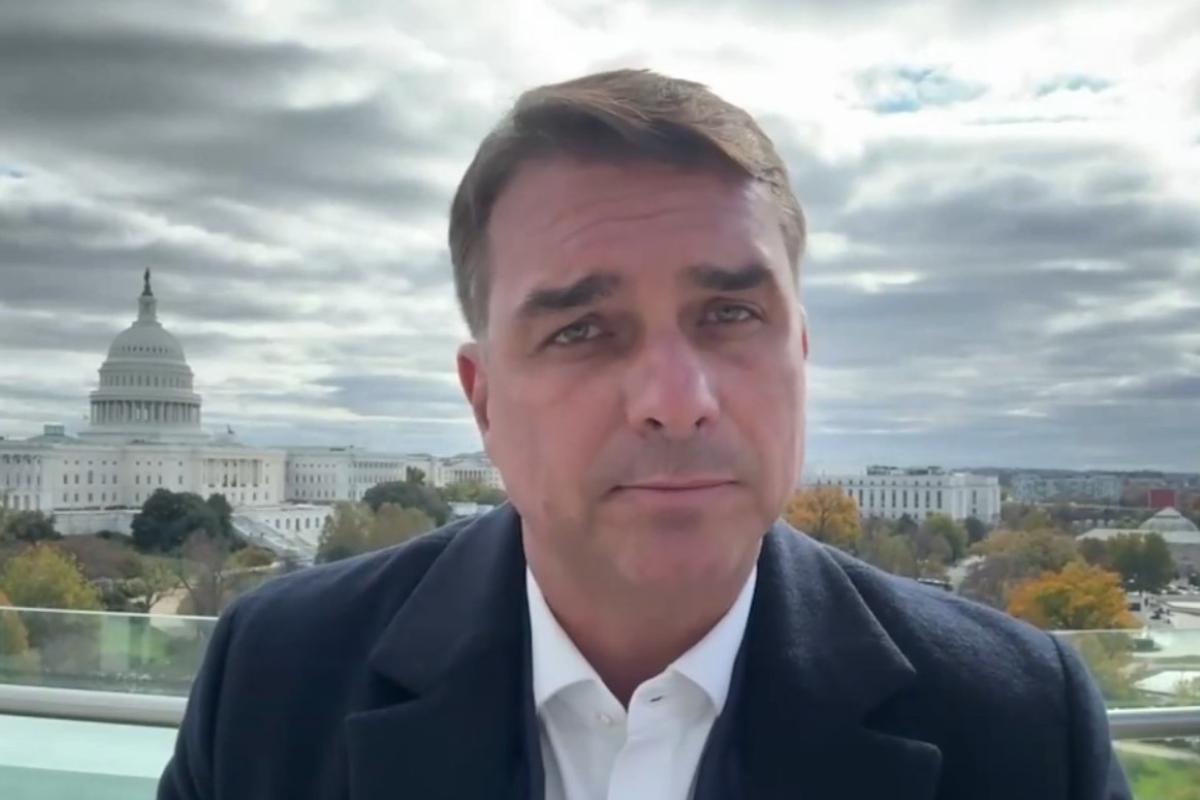
Sen. Flávio Bolsonaro said he had no evidence of fraud in Brazil’s presidential election, claiming he was barred from investigating. (Foto: Instagram)
Senator Flávio Bolsonaro said he has no evidence of fraud in Brazil’s presidential election because, he claimed, he was “barred from investigating.” In an interview with Fox News published Sunday, Nov. 22, he again questioned the security of Brazil’s electoral system.
“I have no evidence because I’m prohibited from investigating,” Flávio said. He argued that the current system does not allow votes to be recounted and called for a system that would print a record of each individual vote while protecting voters’ privacy.
After President Luiz Inácio Lula da Silva was reelected by a margin of 4.4 million votes, Flávio challenged the result and raised suspicions about an extension of voting hours. His party, the Liberal Party, also requested that voting hours be extended. No evidence of fraud was presented, and political allies publicly acknowledged that evidence was lacking.
Flávio also criticized House Speaker Hugo Motta, urging his allies not to support Motta if he seeks another term leading the chamber. Flávio accused Motta of failing to honor commitments made to the political group of former President Jair Bolsonaro. “Hugo Motta has never been part of my political camp,” Flávio said, describing him as a pragmatic politician who also dealt with left-wing parties.
Flávio said Motta had promised amnesty for people convicted over the Jan. 8 attacks but did not follow through. He also criticized a bill passed by the House that recalculates sentences, saying it did not amount to amnesty. “They presented an intermediate proposal called sentencing guidelines, or recalculating sentences. What is that? It is a new process that does not represent amnesty in any way. It simply reduces the sentences of convicted people to some extent,” he said.
In the interview, Flávio said he intends to remain in the United States and continue opposing Brazil’s government from abroad. “I’m going to stay here in the United States, continuing to speak out and say exactly what I think, without hiding anything,” he said. He argued that staying in the country would allow him to speak freely and remain in contact with allies in Congress.
Flávio also said the Senate is one of the main avenues available to Brazil’s opposition. He left Brazil after losing the presidential election to Lula on Oct. 25, amid an order by Supreme Federal Court Justice Alexandre de Moraes to seize his passports. Flávio has since been in the United States with his family and says he plans to continue his political work from there.

