
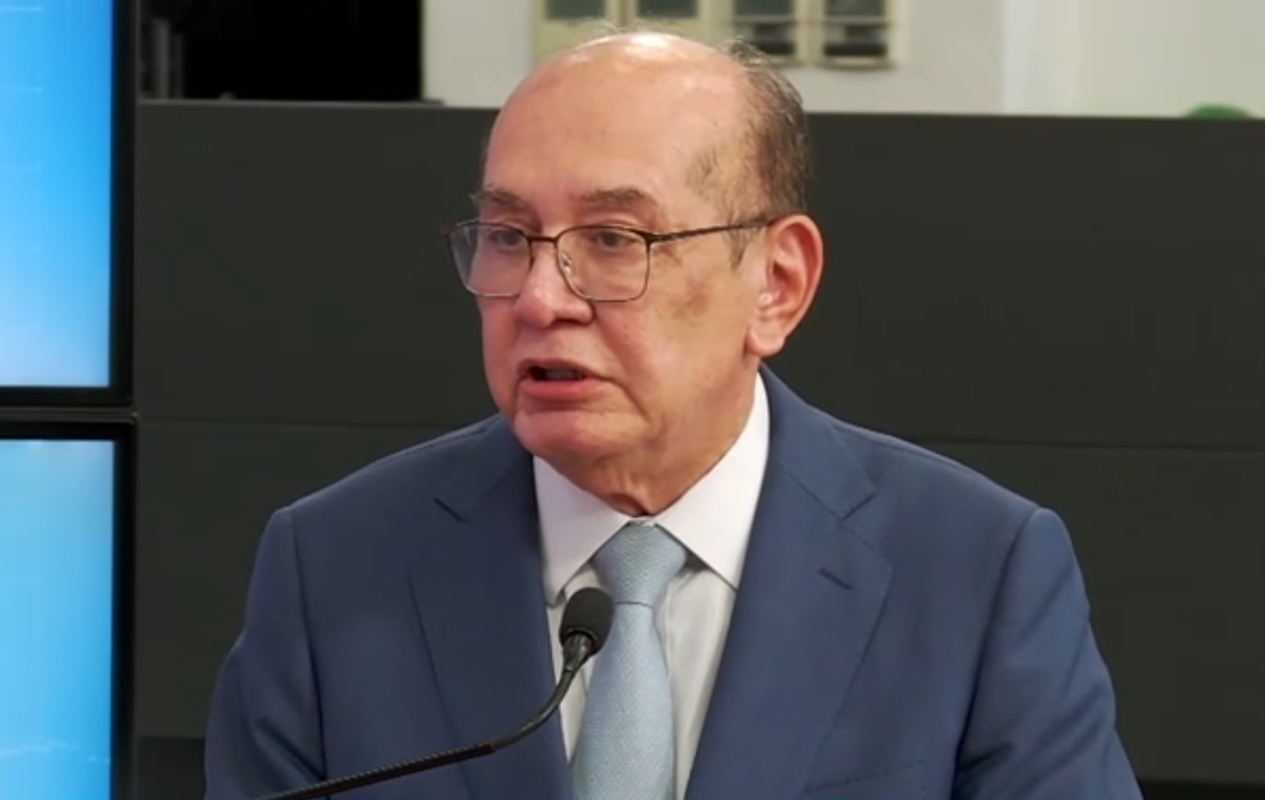
Brazilian Supreme Federal Court Justice Gilmar Mendes said the court’s broad influence may call for greater judicial self-restraint. (Foto: Instagram)
Gilmar Mendes, the senior justice on Brazil’s Supreme Federal Court, said the court has gained an unprecedented level of institutional influence and may have become “one of the most powerful courts in the world.” He also acknowledged that its justices may need to exercise greater self-restraint, saying the court has become so accessible that it is repeatedly asked to intervene.
Mendes made the remarks in an interview with Argentine program Modo Fontevecchia, hosted by journalist Jorge Fontevecchia on Rádio Perfil. He was in Argentina to attend the Second Buenos Aires Forum at the law school of the University of Buenos Aires. Asked about the court’s recent public image amid political clashes and controversies involving justices appointed by different governments, Mendes said the justices themselves consider the limits of their role.
He compared Brazil’s court with Germany’s Federal Constitutional Court and said that broad access to Brazil’s Supreme Federal Court leads it to arbitrate disputes that originate in politics. In his view, constitutional provisions allowing political parties, labor confederations and national professional associations to bring cases before the court have contributed to what he described as “permanent judicialization” of disputes.
Mendes said exceptional institutional crises, especially during Jair Bolsonaro’s government, also fueled the court’s heightened public profile. He described that administration as one that rejected measures intended to limit the spread of the pandemic and relied on the idea of herd immunity. Governors and mayors repeatedly asked the court to intervene, he said, and the court did so. Mendes said those interventions raised the court’s institutional standing but drew attacks from Bolsonaro supporters, who also questioned the integrity of Brazil’s electoral system in 2022. He said the tensions culminated in an attempted coup and the invasion of the seats of the country’s three branches of government on Jan. 8, 2022. The court later convicted Bolsonaro and four generals, a process Mendes said intensified polarization around the judiciary.
Mendes said the Supreme Federal Court played a central role in holding Bolsonaro and military officers accountable for attacks on Brazil’s democratic order. He contrasted Brazil’s prosecution of high-ranking officers, which he described as a first in the country’s history, with Argentina’s transition, which was marked by amnesty. The convictions drew both applause and unrest in a deeply divided country, he said, adding that the consequences warranted deeper analysis.
He also discussed the crisis involving Banco Master and banker Daniel Vorcaro. Mendes attributed the episode to failures in oversight and financial regulation, arguing that it should not be assigned to Brazil’s three branches of government. He said Banco Master had sold certificates through other large banks for an extended period, and that the circumstances called for a broader review of regulators’ actions, involving lawmakers, media executives and Central Bank representatives. Mendes also referred to indications that some justices may have benefited and to a contract involving the wife of Justice Alexandre de Moraes. He lamented the controversy’s reach and said the court had become a central focus of political and institutional debate over the case.

