
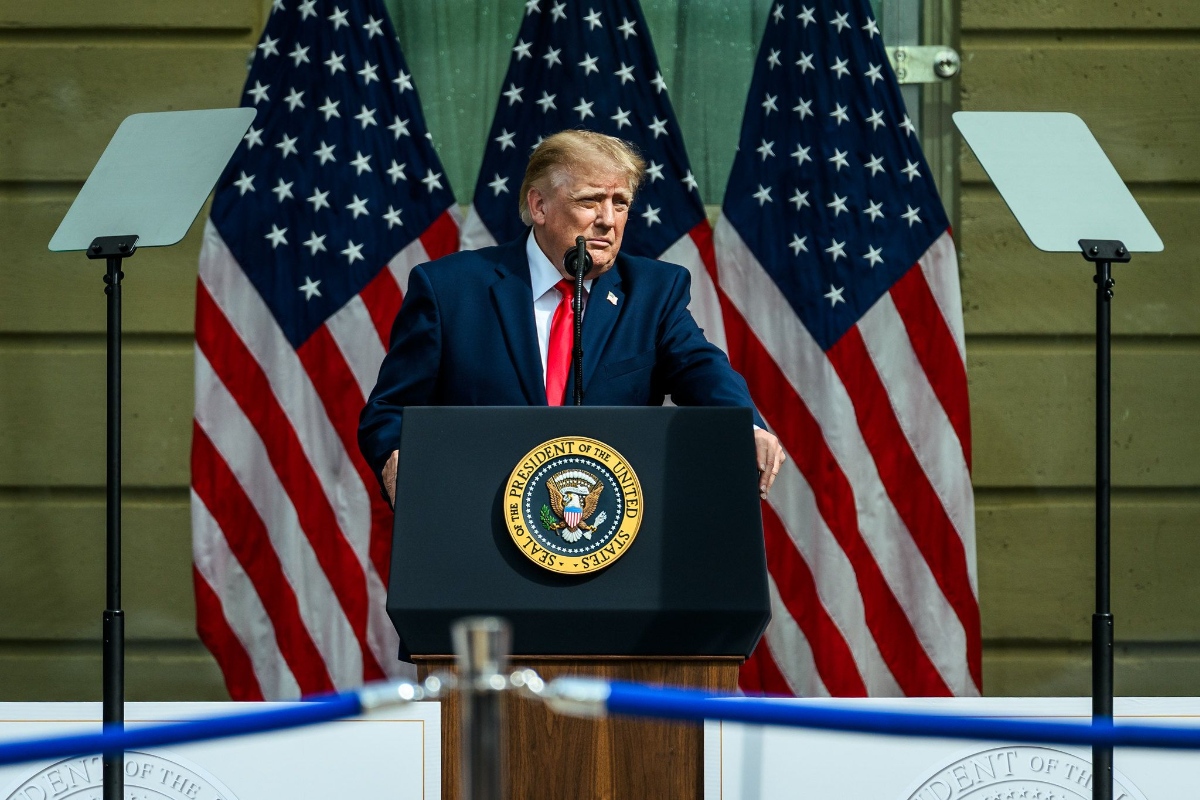
A Nov. 2 poll found Democrats leading or tied in several Senate races, including contests in states that have traditionally favored Republicans. (Foto: Instagram)
A New York Times-Siena University poll published Nov. 2, the day before the U.S. midterm elections, showed Democrats leading in Michigan, Texas, Kansas, Maine and Ohio, holding an advantage in Alaska and effectively tied with Republicans in Iowa. The findings suggest an unusually competitive Senate landscape, with Democratic candidates gaining ground in states that have traditionally favored Republicans.
Democrats seeking control of the Senate must defend their current seats and win at least four seats now held by Republicans, according to the report. Several of the contests that once appeared difficult for the party are now close enough to raise the possibility of a shift in the chamber’s balance. The poll found Democratic candidates ahead in five states with Republican senators—Kansas, Maine, Ohio, Texas and Alaska—while the Iowa race was essentially tied.
In Texas, state legislator James Talarico led Republican Attorney General Ken Paxton, 50% to 43%. Democrats have not won a Senate race in Texas since 1988. The poll also showed Democrat Troy Jackson ahead of Republican Sen. Susan Collins in Maine, 51% to 45%. Kansas, where no Democrat has won a Senate seat since 1932, was another state where Democrats were competitive. In Michigan, the only state in the poll where Democrats were defending a Senate seat, the party held a double-digit lead.
The survey pointed to dissatisfaction with President Donald Trump and the economy as factors in the political shift. Across the seven states, 38% of likely voters approved of Trump’s job performance. He won five of those states by double-digit margins two years earlier, the report noted. The cost of living emerged as voters’ top concern, and Democrats held an average nine-point advantage over Republicans on which party voters trusted more to address it. Democrats led on that measure in all seven states.
Democratic candidates also led among independent voters in each state included in the poll and showed renewed support among young and Latino voters. The report said Republicans received only about one-quarter of the vote among those groups. At the same time, Republicans appeared to be losing some support among their traditional base of white working-class voters. In Ohio, the share of Republicans who strongly approved of Trump’s performance fell from 63% in June to 51%.
The poll’s findings did not guarantee a Democratic victory. Susan Collins trailed in every poll in Maine six years ago but went on to win reelection comfortably, the report said. Late-deciding and undecided voters in the current races leaned Republican by nine percentage points, a possible advantage in close contests. In Iowa, Democrat Josh Turek and Republican Ashley Hinson were tied, making the late-voting bloc potentially consequential.
The survey also pointed to Democratic strength in states outside its seven-state sample: Democrats were described as holding a solid lead in North Carolina, while South Carolina had been a statistical tie the previous week. If the poll’s overall picture held on Election Day, Democrats could exceed the four-seat gain needed to take the Senate and alter the balance of power in Washington. Whether voter frustration with the economy and Trump’s performance would translate into votes remained uncertain.

