
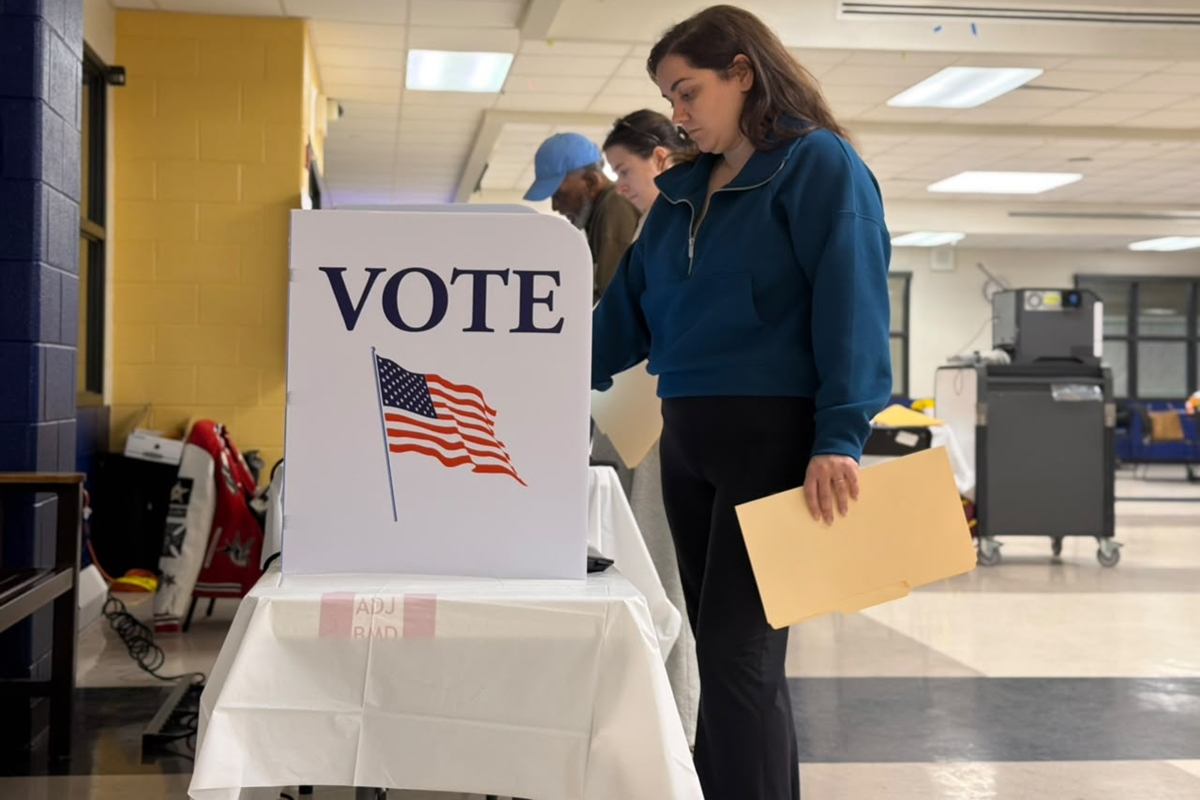
U.S. voters are choosing members of Congress and governors in 36 states, with polling places closing at different times across the country. (Foto: Instagram)
Polls in the United States’ midterm elections were scheduled to begin closing at 8 p.m. Tuesday, Nov. 3, Brasília time. Millions of voters are choosing members of Congress and governors in 36 states. Because polling hours vary by state and time zone, voting does not end nationwide at once, and early results are expected to come in at different times through the night.
The United States has six official time zones, and the first polls were expected to close at 8 p.m. Brasília time in Indiana and Kentucky, where voting began earliest. Closures were scheduled for 9 p.m. in Georgia, South Carolina, Vermont, Virginia and most of Florida; 9:30 p.m. in North Carolina, Ohio and West Virginia; and 10 p.m. in Alabama, Connecticut, Delaware, Illinois, Maine, Maryland, Massachusetts, Mississippi, Missouri, New Jersey, Oklahoma, Pennsylvania, Rhode Island and Tennessee. Polls were also set to close at 10 p.m. in the District of Columbia and in most of Kansas, Michigan, North Dakota and South Dakota.
Arkansas polls were scheduled to close at 10:30 p.m. At 11 p.m., polls were expected to close in Arizona, Colorado, Louisiana, Minnesota, Nebraska, New Mexico, New York, Wisconsin and Wyoming, as well as in the remaining parts of North Dakota, South Dakota and Texas. At midnight Wednesday, most of Idaho, along with Montana, Nevada and Utah, would close; California, Washington and Oregon were set to close at 1 a.m., Hawaii at 2 a.m. and Alaska at 3 a.m. All of these times are Brasília time.
The United States does not have a central body that compiles election results. Each state is responsible for counting votes and releasing its results as local tallies are completed, a process that can take days or even weeks. The staggered poll closings mean that initial results will emerge at different points during election night, while final counts may take longer.
On Tuesday afternoon, President Donald Trump used social media to celebrate Republican results in Guam, a U.S. island in the Pacific with just over 150,000 residents. Voters there went to the polls to elect a governor and a delegate to the U.S. House of Representatives. The results were not official, and Guam’s representative has limited congressional powers: The delegate can introduce bills, take part in debates, serve on committees and propose amendments, but cannot vote on final passage of bills on the House floor.
Midterm elections take place halfway through a president’s term and are often viewed as a measure of public approval of the administration. There is no presidential candidate on the ballot, but the results can reflect voters’ views of the country’s direction. This year, voters are choosing all 435 members of the House and 35 of the Senate’s 100 members, as well as governors in 36 states.
Republicans, Trump’s party, currently hold 218 House seats, compared with 214 for Democrats. Democrats need to gain four additional seats to regain control of the chamber. In the Senate, Republicans hold 53 seats, while Democrats and independents aligned with them have 47; Democrats would need 51 seats to take the majority. Congress writes and passes federal laws and oversees the executive branch, so a change in its makeup could make it harder for the White House to advance key priorities and shift the balance of power in Washington.

