
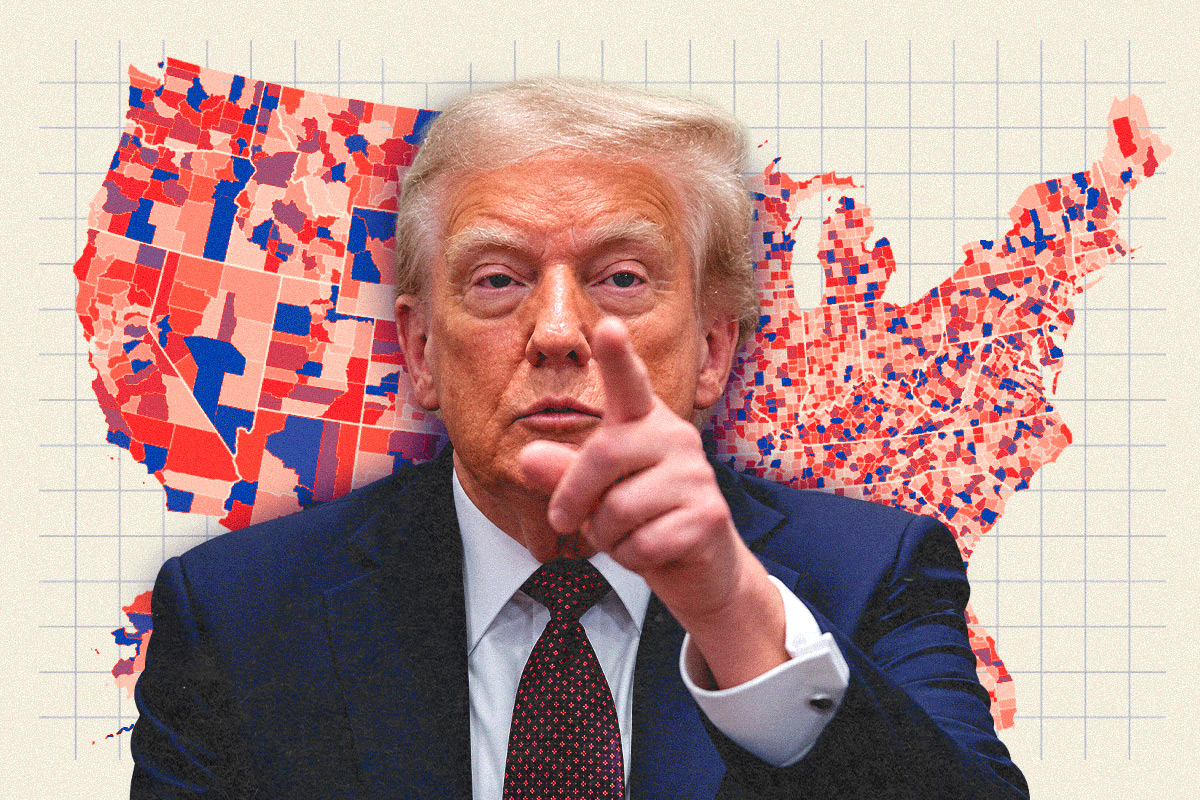
Election officials began counting ballots Tuesday after polls closed in parts of Indiana and Kentucky, as voters chose members of Congress and governors in the 2026 midterm elections. (Foto: Instagram)
Vote counting began in the 2026 U.S. midterm elections, which will determine the makeup of the House of Representatives and one-third of the Senate. At 8 p.m. Brasília time on Tuesday, Nov. 3, polls closed in parts of Indiana and Kentucky, and officials began tabulating ballots. The results could affect President Donald Trump’s ability to advance his agenda.
The first results were expected Tuesday night, but the final outcome could take days. In the 2022 and 2024 midterms, control of the House was not decided until eight days after voting began. Poll closing times, listed in Brasília time, were staggered across the country: Indiana and Kentucky began closing at 8 p.m.; Georgia, South Carolina, Vermont, Virginia and most of Florida at 9 p.m.; and North Carolina, Ohio and West Virginia at 9:30 p.m. Polls in many other states closed at 10 p.m., with Arkansas at 10:30 p.m. and Arizona, Colorado, Louisiana, Minnesota, Nebraska, New Mexico, New York, Wisconsin and Wyoming at 11 p.m. The remaining areas of North Dakota, South Dakota and Texas also closed at 11 p.m. Most of Idaho, along with Montana, Nevada and Utah, closed at midnight Wednesday; California, Washington and Oregon at 1 a.m.; Hawaii at 2 a.m.; and Alaska at 3 a.m.
The election comes as Trump’s administration faces mounting pressure. The source described his approval as falling amid the prolonged war against Iran and rising living costs. Voters are choosing all 435 House members, 35 senators and 36 governors. Ballot measures across the country also cover issues including election administration and abortion access.
Midterms are held every two years between presidential elections and are often viewed as a referendum on the sitting administration. No presidential candidate is on the ballot, but the results can reflect voters’ views of the country’s direction. House members serve two-year terms, while senators serve six-year terms. Republicans currently hold 218 House seats, compared with 214 for Democrats; Democrats need to gain four seats to take control, according to the source. In the Senate, Republicans hold 53 seats, while Democrats and independents aligned with them have 47. Democrats would need 51 seats for a majority. They are seeking control of both chambers.
Control of Congress matters because lawmakers write and pass federal legislation and oversee the executive branch. A change in party control could make it harder for the White House to pass priority bills and shift the balance of power in Washington. The Senate also considers presidential nominees for senior government posts, ambassadorships and federal courts, including any future Supreme Court vacancies.
On Monday, Nov. 2, Trump made a roughly 50-minute campaign speech at the Lincoln Memorial Reflecting Pool in Washington, urging voters to help Republicans keep their congressional majorities. He called the election the most important of their lives and described the Democratic candidates as “the most extreme and dangerous slate in American history.” He also accused Democrats of supporting open borders, higher taxes, gun restrictions and policies that he said would raise energy costs and increase immigration. Trump said the country was in a “golden age,” praised his administration’s economic performance and urged supporters to vote as if he were personally on the ballot.
Some voters’ concerns about the cost of living have also troubled Republican strategists, the source reported. They were concerned that Trump was focusing on renovation and construction projects, monuments and other structures in Washington while Americans faced economic difficulties. A Democratic victory in either chamber could bring new scrutiny of the administration. If Democrats take the House, they would control its committees and could subpoena administration officials, request documents and open investigations, including into contracts, conflicts of interest and presidential actions taken by executive order.
Democrats could also pursue impeachment. The House has the authority to bring charges against a president, while the Senate conducts the trial; conviction requires support from two-thirds of senators. Even without control of Congress, Trump could use executive orders to pursue parts of his agenda, but a Democratic majority could increase institutional resistance and make it harder to turn proposals into law. The midterm results could also shape political maneuvering ahead of the 2028 presidential election, which Trump cannot enter because he has already served two terms.

