
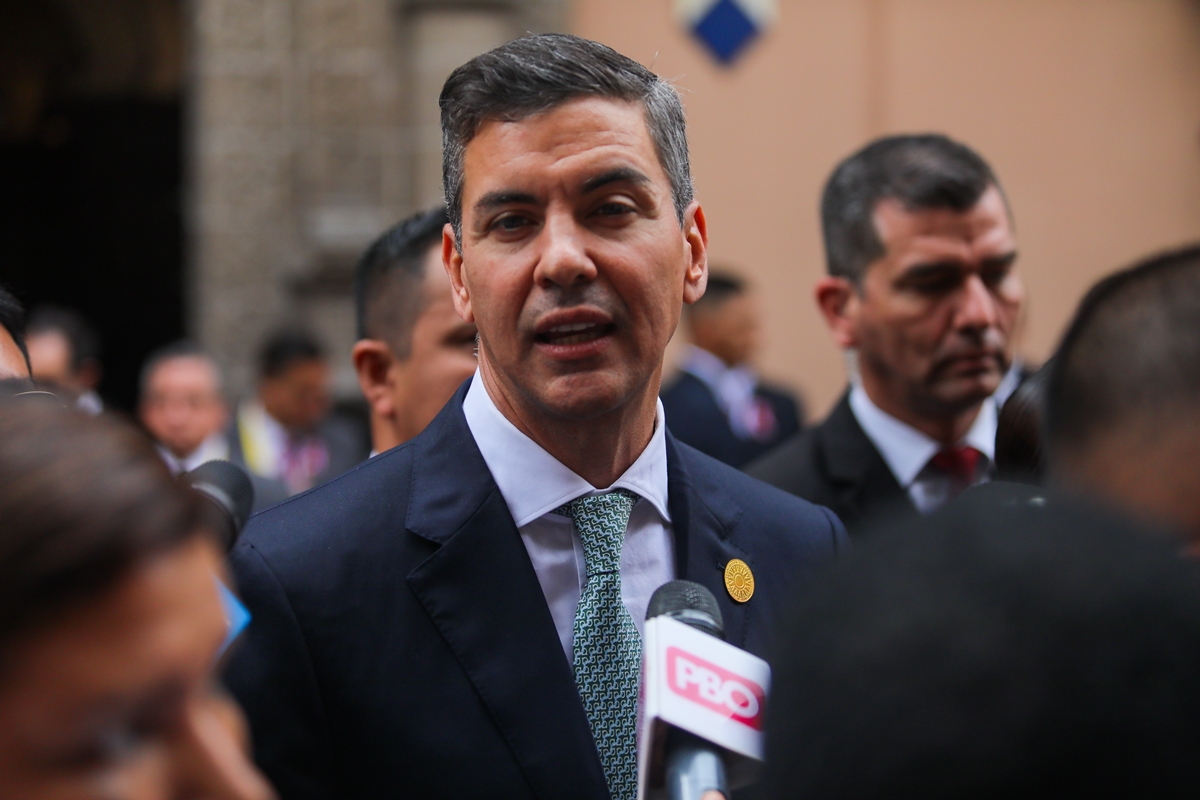
Paraguay’s Senate approved the impeachment of President Santiago Peña on Friday, Nov. 6, with 44 votes in favor and one abstention, amid allegations of ties to Banco Ueno. (Foto: Instagram)
Paraguay’s Senate approved the impeachment of President Santiago Peña on Friday, Nov. 6, amid allegations of links to Banco Ueno, the country’s largest digital bank, which was dissolved earlier in the week. The bank’s closure left thousands of customers unable to access money in their accounts. The impeachment vote was 44 in favor, with one abstention. A two-thirds majority of senators was required for the measure to pass.
Peña had requested an additional 72 hours to prepare a defense against the accusations, but the Senate rejected his request. The impeachment process was initiated in the Chamber of Deputies on Thursday, despite Peña’s reported resignation from office. He did not attend the Senate session in person; attorneys Ricardo Preda and Adolfo Ferreiro represented him.
A group of 35 lawmakers submitted the impeachment request, citing Peña’s alleged personal involvement with Banco Ueno. He was a shareholder in the group that controlled the bank until 2025. Among the allegations, lawmakers say Peña promoted changes to the conflict-of-interest law and allowed billions of guaranies in guarantees from Paraguay’s Social Security Institute, known as IPS, to be concentrated at Banco Ueno. They allege that the amount exceeded legal limits.
Lawmakers also accuse Peña of failing to serve the public interest when he appointed Carlos Cavalla, who had held a position at a company associated with Ueno, to lead Paraguay’s Central Bank. Cavalla resigned as Central Bank president after the Ueno crisis and protests across the country, according to the report. Separately, Paraguay’s Public Prosecutor’s Office has opened a formal investigation into Peña’s ties to the bank. The investigation is examining allegations of illicit enrichment, money laundering, corruption, administrative fraud and influence peddling.
Banco Ueno had about 2.9 million customers, roughly 40% of Paraguay’s population. The Central Bank dissolved the institution after finding that its solvency level—a measure of its ability to meet financial obligations—was less than half the required level. The bank’s accounts were blocked, preventing customers from accessing deposited funds. Banco Ueno is also accused of asset manipulation and of making loans to companies linked to its controlling group. Eight bank executives were arrested, including president Juan Gustale and vice president and founder Miguel Vázquez.

