
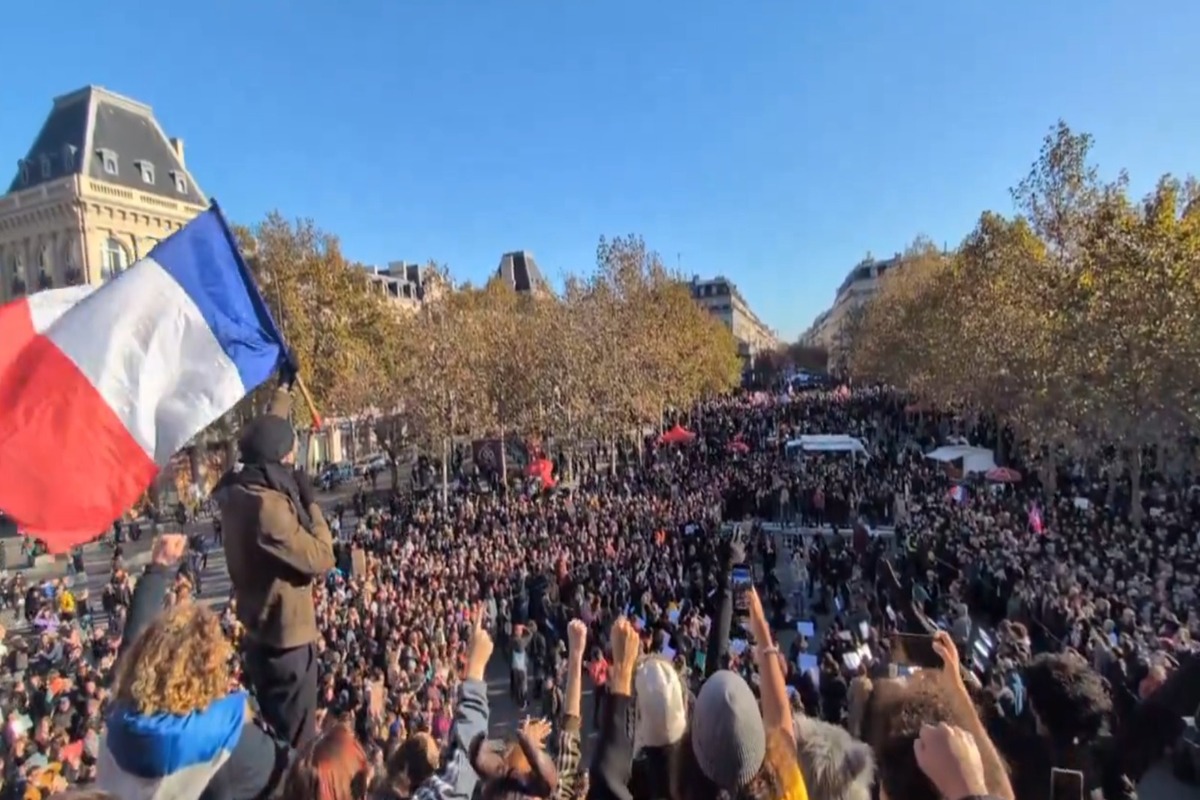
French labor unions called for nationwide demonstrations against inflation and the rising cost of living on Tuesday, Nov. 17. (Foto: Instagram)
France’s main labor federations called a new nationwide day of demonstrations against inflation and the high cost of living on Tuesday, Nov. 17. The mobilization follows strikes on Sept. 29 and Nov. 5, as well as a fifth national protest involving students, public employees and Yellow Vest demonstrators. The General Confederation of Labor, the country’s largest labor federation, expects 179 demonstrations nationwide. Organizers have also called for another day of national mobilization on Saturday, Nov. 21.
The date carries historical significance for the Yellow Vest movement. On Nov. 17, 2018, about 282,000 people occupied roundabouts and roads across France to protest rising fuel costs, launching the movement. The current demonstrations bring together labor federations, student organizations and representatives of the Yellow Vests.
The Education Ministry estimates that 3.73% of elementary school teachers will join Tuesday’s strike. The participation rate among high school teachers had not been released. During the previous mobilization, on Nov. 5, about 16% of high school teachers went on strike. In a bid to limit the protests and prevent damage to public property or assaults on school communities, Paris police issued an order on Sunday, Nov. 15, barring unauthorized gatherings and marches through Friday, Nov. 20, within 100 meters of 10 high schools and on the campuses of five universities in the capital.
Authorities announced a major security operation across the Paris metropolitan area, including additional personnel at train stations and on transportation networks to prevent disturbances. Rail travel is also expected to be affected by a strike among railway workers. The CGT said participation in the Nov. 5 action exceeded one-third of the workforce.
State-owned railway operator SNCF said regional train services, known as TER, would be changed in several areas, with about 100 of the 1,000 scheduled trips expected to be canceled—roughly one in 10. High-speed TGV services were expected to run normally. In the Paris metropolitan area, suburban rail lines could also face disruptions, and transit operator RATP confirmed that some subway stations near demonstrations would close as a precaution.
The main march in Paris is scheduled to begin at 2 p.m. local time, or 10 a.m. in Brasília. It will start at Place de la Nation and cover about four kilometers to Place d’Italie. The route was set after negotiations with Paris police, who rejected the unions’ original proposal to march from Esplanade des Invalides to Place d’Italie, citing the need to ensure better crowd control and public safety.

