
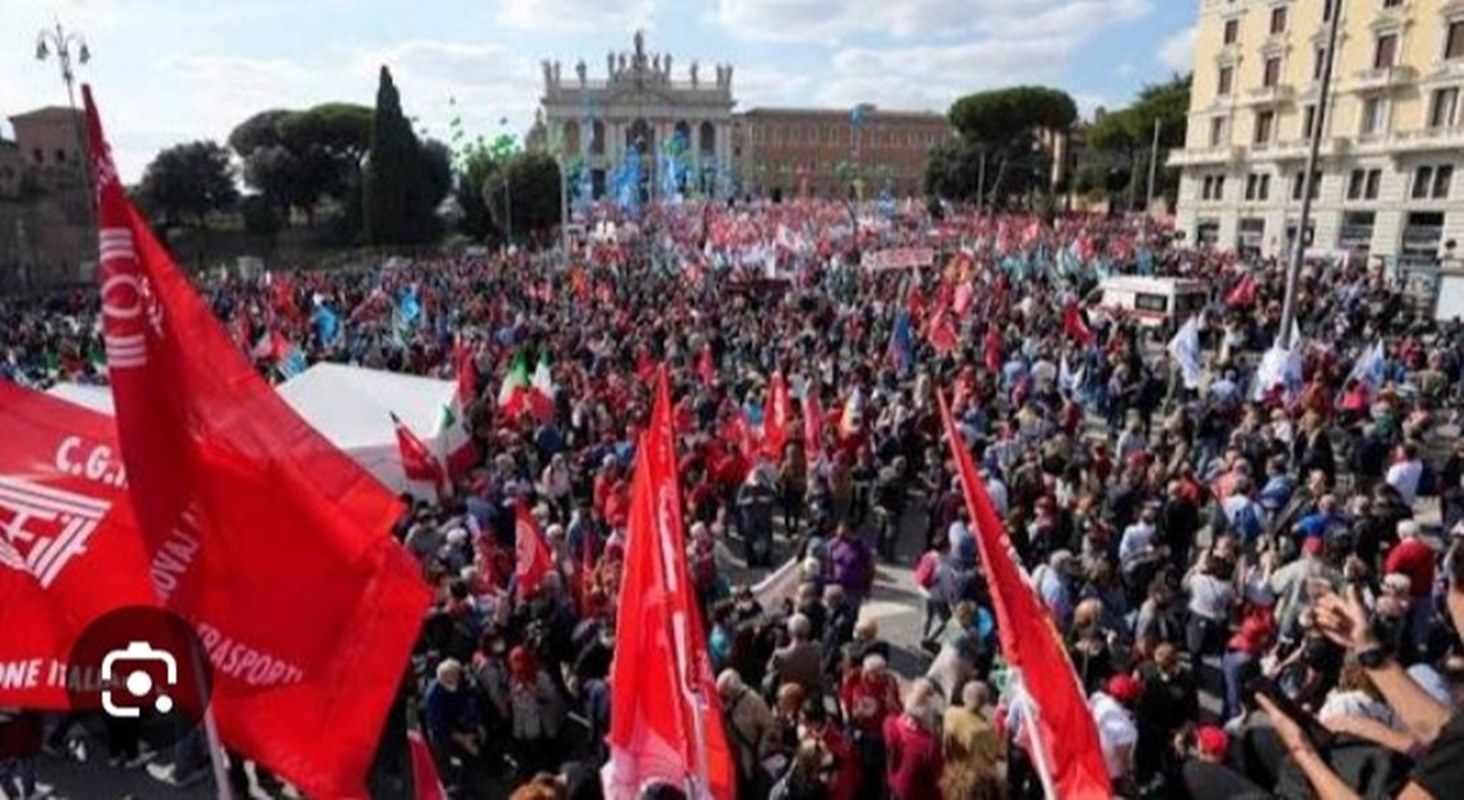
Workers and students joined a nationwide general strike in Italy on Friday, Nov. 20, protesting the government’s economic policies and calling for higher wages and stronger public services. (Foto: Instagram)
Thousands of workers and students took to the streets in cities across Italy on Friday, Nov. 20, during a general strike opposing the economic policies of Prime Minister Giorgia Meloni’s government. The 24-hour walkout, called by the Italian General Confederation of Labor (CGIL), Italy’s largest trade union federation, brought together public- and private-sector employees, including education and health care workers.
Demonstrations, marches and other events organized by unions and social movements were scheduled in more than 100 cities. The CGIL is calling for higher wages, renewed labor contracts, protection for pensions and increased investment in health care, education and other public services. Students also joined the protests, demanding better educational conditions, action to address the cost of living and policies to reduce inequality.
The mobilization comes amid dissatisfaction over workers’ declining purchasing power and deteriorating public services. Unions have criticized the government’s proposed 2027 budget, which includes an economic package of approximately 26 billion euros. The CGIL says the proposed measures do not adequately address the public’s needs or problems involving income, employment and social protections.
Among the unions’ demands are wage increases, full pension adjustments to account for inflation, preservation of current retirement rules and the renewal of employment contracts. Protesters are also seeking more funding for hospitals, schools and social assistance programs. The demands reflect the broad scope of the strike, which covers both public and private employment, while also drawing support from student groups.
The strike coincides with an international student mobilization involving youth organizations from several European countries. In Italy, students held events in more than 45 cities focused on education funding, housing rights and the cost-of-living crisis. Some protests also criticized rising military spending and called for money earmarked for rearmament to be redirected to social programs. Participants included student organizations, feminist and environmental groups, and housing-rights advocates.
The walkout adds to pressure on Meloni’s government over its economic proposals. Industry Minister Adolfo Urso described the strike as premature, while saying he respected the right to demonstrate and acknowledging that the budget could still be amended as it moves through Parliament. Schools, health care facilities and local public transit were among the services affected, though essential care was maintained. Air travel was excluded from the national strike. Rail services were also excluded, but other unions called a separate rail strike from Friday night into Saturday, Nov. 21.

