
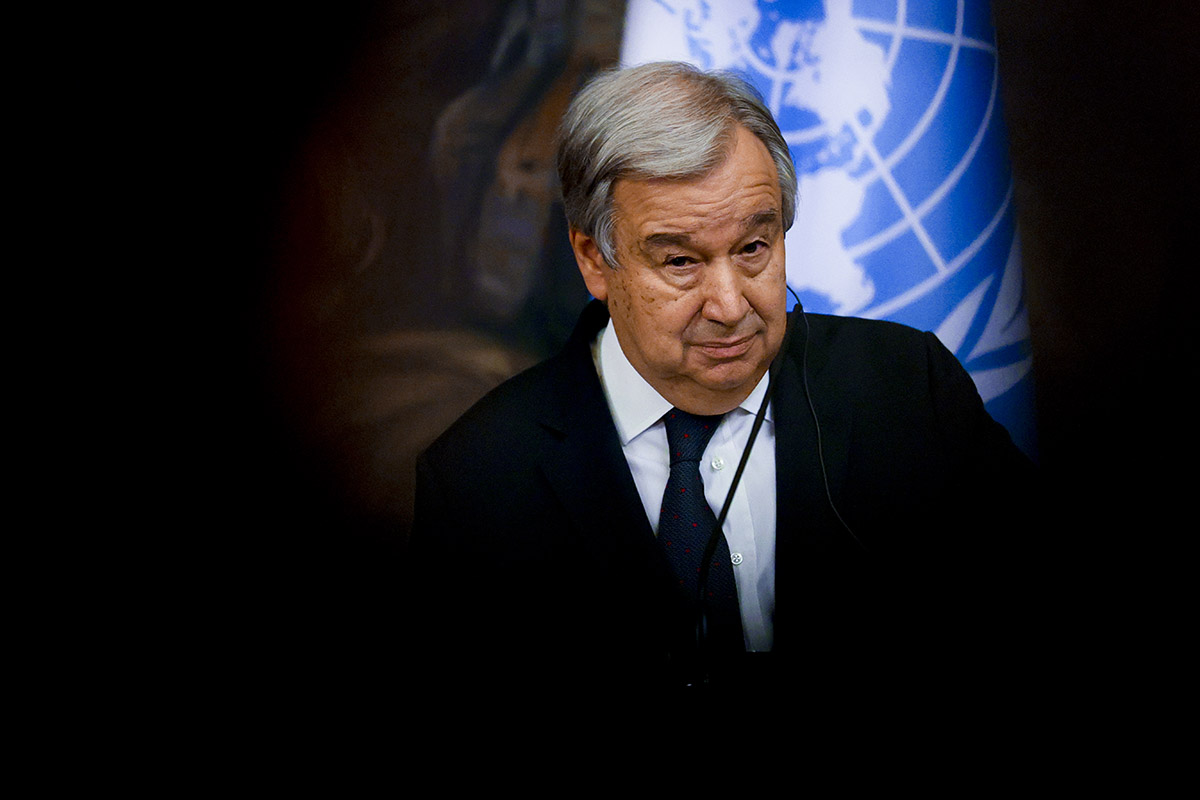
UN Secretary-General António Guterres urged countries to negotiate international rules for lethal autonomous weapons, warning that decisions about the use of force must remain under human control. (Foto: Instagram)
António Guterres, secretary-general of the United Nations, warned on Nov. 24 about the risks of artificial intelligence in armed conflicts and said decisions about the use of force must remain under human responsibility. Speaking at a UN Security Council meeting, he urged countries to begin urgent negotiations on international rules governing the development and use of lethal autonomous weapons.
“We cannot allow AI to undermine the fundamental principle of human control over the use of force and the decision to kill on the battlefield,” Guterres said. He called for an international, legally binding agreement on lethal autonomous weapons systems, aimed at setting limits on the development and use of equipment that can carry out attacks without human control.
Guterres said military systems are gaining autonomy across multiple stages of operations, including gathering and analyzing information and identifying and selecting targets. He noted that these capabilities are not limited to governments and could also be used by non-state armed groups. He expressed particular concern about weapons that can choose and attack targets without meaningful human intervention.
“Machines that select targets and take lives without human control are morally repugnant and politically unacceptable,” Guterres said. “Killer robots should have no place in our future.” He warned that delegating decisions about life and death to machines poses both a moral and a political problem.
The debate comes as militaries increasingly incorporate AI into their strategies. The technology is being used to process large volumes of data, analyze satellite imagery, identify potential targets and support operations involving drones and other combat systems. Its processing speed can shorten the time available for decisions in the field, while automating parts of military operations raises questions about accountability for attacks, the risk of errors and whether people can intervene before lethal action is taken.
Guterres also warned that international competition involving AI, energy, water and critical minerals could add to global tensions and threaten international peace and security. His call for negotiations focused on establishing shared rules for lethal autonomous weapons as these technologies advance.

