
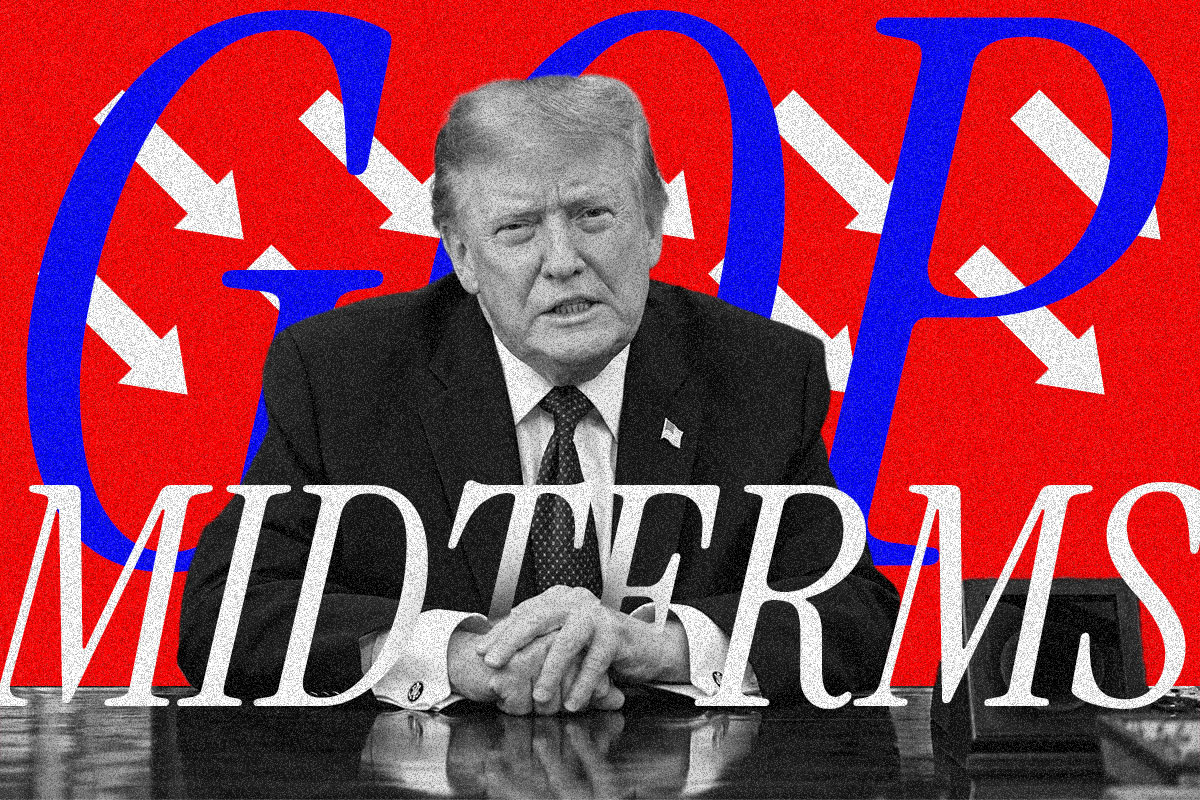
Democrats made historic gains in the Nov. 3 midterm elections, winning control of both chambers of Congress and 28 state governorships as voters expressed dissatisfaction with President Donald Trump’s administration. (Foto: Instagram)
The Democratic Party’s historic gains in the Nov. 3 midterm elections reflected dissatisfaction with President Donald Trump, economic strain and changes in voter behavior, according to political analysts. Democrats won control of both chambers of Congress and made inroads in areas long associated with Republicans. The results, described as a “Democratic tsunami,” came amid discontent over Trump’s policies, the economic effects of the war with Iran, renewed support among Latino voters and the emergence of a new generation of Democratic candidates.
The gains extended beyond Congress. As results were last updated, Democrats had won 28 state governorships, including victories in Texas and Kansas. Although the president’s opposition party often gains ground in midterm elections, the breadth of this year’s victories stood out, particularly where Democrats reversed traditional results. Analysts point to inflation, rising energy costs, trade tariffs and tighter immigration policies as factors that alienated some voters who supported Trump in 2024.
Trump’s approval rating reached 31% in October, the lowest level of his second term up to that point. Frederico Bertholini Santos Rodrigues, a political scientist and adjunct professor at the University of Brasília’s Institute of Political Science, said the outcome was primarily a reaction to the Republican administration’s decisions. “So, yes, I would say it is basically a rejection of Trump,” he said. Democrats’ breakthroughs included winning a Senate contest in Kansas for the first time since 1932 and securing state-level victories in Texas after decades without comparable results, according to the report.
Political scientist André Rosa said voter distrust also stemmed from the administration’s handling of diplomatic and trade relations. Trump’s foreign policy raised concerns about the future of U.S. ties with other countries and the potential economic consequences of isolation, Rosa said. The war with Iran also affected household budgets: pressure on oil markets contributed to higher fuel and other prices, while energy costs fed into food and service prices. The U.S. role in the conflict ran counter to Trump’s stated support for a less interventionist foreign policy and an end to prolonged military engagements. Vice President JD Vance attributed the Republican loss to the conflict in his first remarks after the results, saying, “The reason we lost is the war.”
Lucas Portela, an international relations professor at the University Center of Brasília, cautioned that the war alone could not explain the Republican defeat. In his view, it mattered mainly through its indirect economic effects. Portela also said the administration’s tariff policy added to price pressures, compounding the difficulties consumers were already facing. The broader combination of economic pressures and dissatisfaction with the administration contributed to weakening Republican support, analysts said.
Latino voters, who make up 16% of eligible U.S. voters, leaned toward Democrats in the midterms. New York Times projections indicated that 69% voted for Democratic House candidates, a 28-percentage-point increase from 2024. Support reached 70% in Texas and 75% in Kansas. The shift came as approval of Trump among Latino voters who supported him in 2024 fell from 93% to 57%, according to the Pew Research Center. The economy was the leading concern for 86% of Latino voters, while 64% cited immigration. Bertholini said stricter immigration policies, alongside inflation, helped drive voters away from the Republican Party.
Democratic control of the House and Senate is expected to make it harder for Trump to advance his agenda during the final two years of his term. Once the new Congress takes office in January 2027, Democrats will have greater authority to oversee the administration, summon officials, demand documents and open investigations. Their victory does not give them enough votes to override presidential vetoes, which requires support from two-thirds of members present in both chambers. Rosa said the result significantly weakened Trump’s political movement and could make it harder to select a strong successor. Bertholini said Democrats would seek to make the Republican Party’s 2028 candidacy “less viable and less celebratory.”

