
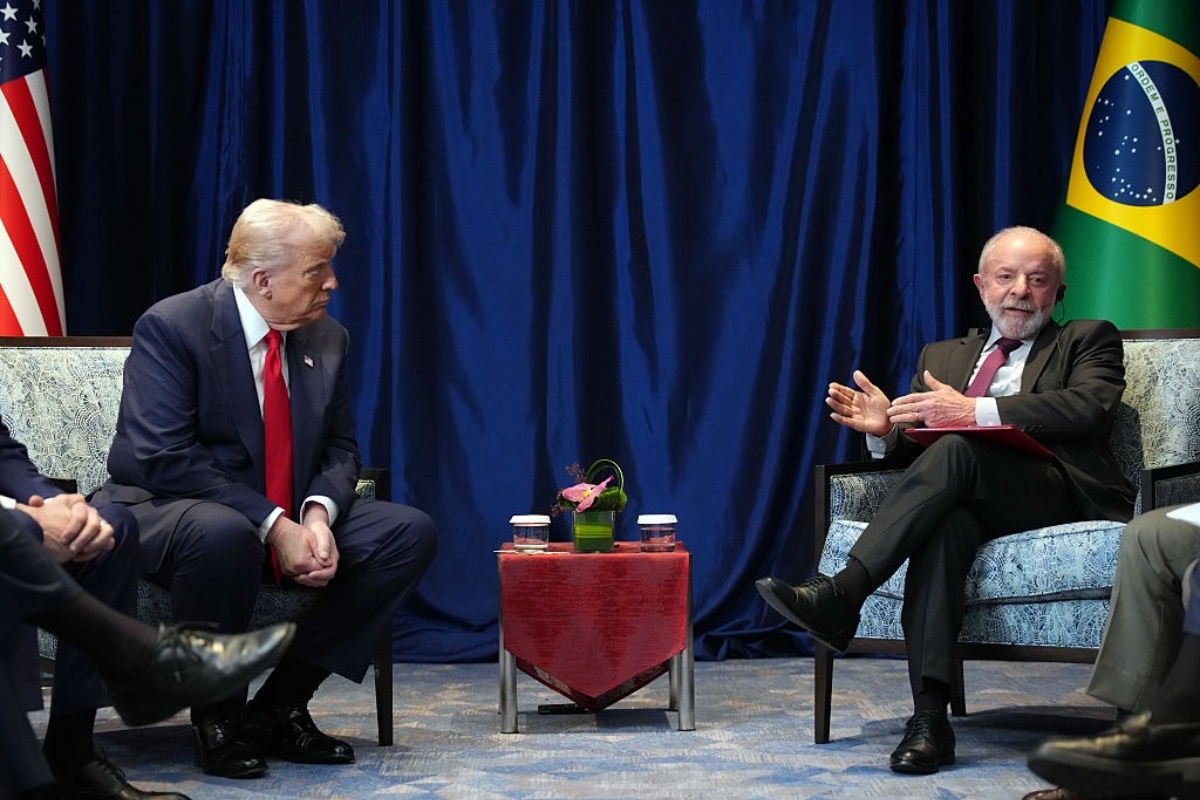
Democratic gains in the U.S. midterm elections were welcomed by allies of Brazilian President Luiz Inácio Lula da Silva, while his government said it would wait to assess the impact on relations between the two countries. (Foto: Instagram)
The government of Brazilian President Luiz Inácio Lula da Silva viewed the Democratic Party’s gains in the U.S. midterm elections positively, while saying it would wait to see how the new political balance affects relations between the countries. Democrats won control of both the House of Representatives and the Senate in the Nov. 3 election, a setback for President Donald Trump.
Democrats also won governorships in states previously led by Republicans, including Georgia, Iowa, Texas, Ohio and Nevada. Lula’s allies and members of his government celebrated what they called a “blue wave.” On social media, government supporters described Trump’s defeat as decisive and drew comparisons with Lula’s victory in Brazil’s presidential election.
The results could give Democrats greater ability to block Trump administration proposals and increase oversight of the administration. The election put 35 Senate seats, 36 governorships and all 435 House seats on the ballot. Partial results showed Democrats exceeding 50 Senate seats and 218 House seats, the thresholds cited for majorities in both chambers. By 6 p.m. on Nov. 4, Democrats had also won 28 governorships, compared with 20 for Republicans. Trump and his allies blamed the election outcome on the war against Iran.
Brazil’s government had been waiting for the midterm results before deciding how to approach a relationship strained in recent months by political and trade disputes. Officials hope the end of the election period will allow talks on bilateral issues to resume. One unresolved matter is the steep tariff imposed by the U.S. government on Brazilian goods. Negotiations resumed in August after a phone call between Lula and Trump, but were put on hold during the election period.
The changed makeup of Congress could also help bring discussions forward on issues important to Lula’s international agenda, including the environment and regulation of major technology companies. Government allies have pointed to what they called “imbalances” in the role of digital platforms during Brazil’s election campaign, particularly Meta. The Democratic majority could make it harder for Trump to pass legislation he supports over the next two years, while giving the party more leverage to scrutinize his administration.
Relations have also been affected by a U.S. restriction on the visa of Brazilian Ambassador Maria Luiza Viotti and the departure for Miami of Senator Flávio Bolsonaro, who lost Brazil’s election. The source reported that the White House may have supported his departure. Bolsonaro left Brazil in defiance of a court order, and the U.S. government granted him a visa to remain in the country. The United States was among the few countries that did not officially recognize Lula’s election victory; Trump suggested, without presenting evidence, that the result involved fraud. The Planalto Palace is avoiding direct responses to Trump’s statements, seeking to prevent further escalation and keep the dispute from being used for political purposes.

