
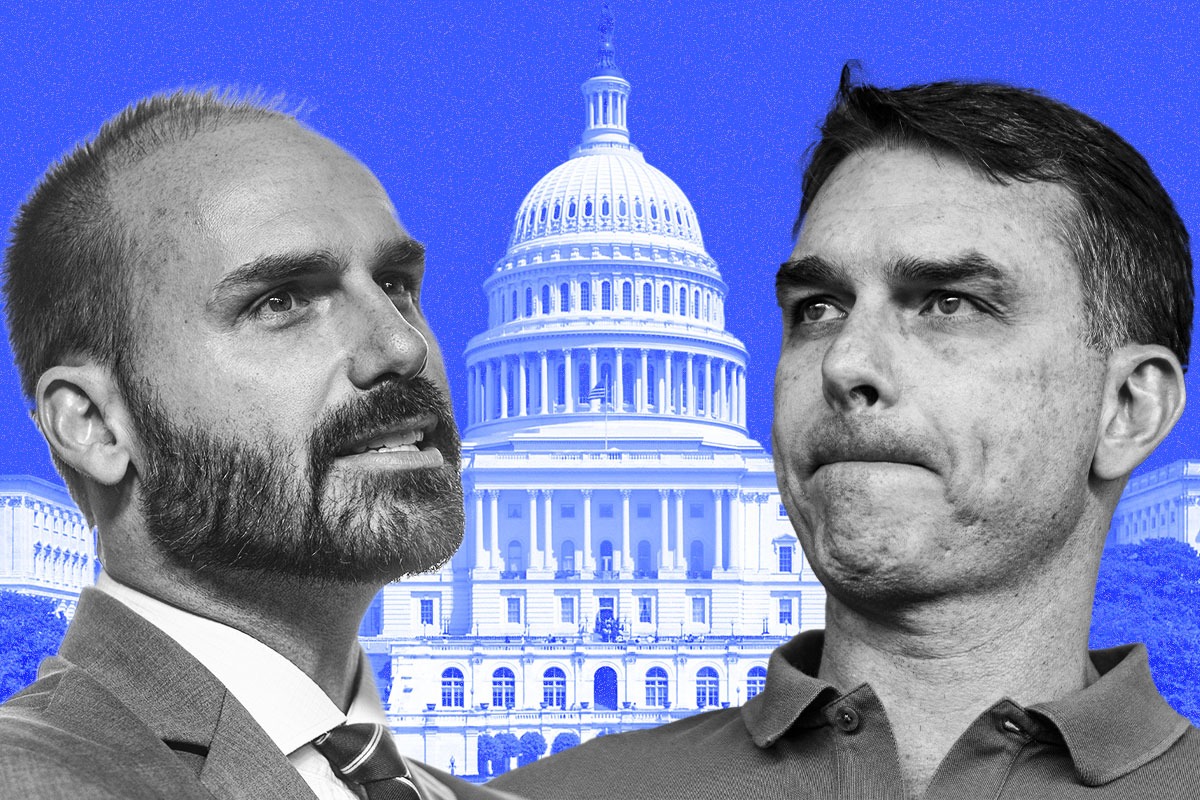
A Democratic takeover of Congress could intensify scrutiny of the Trump administration’s dealings involving Flávio and Eduardo Bolsonaro. (Foto: Instagram)
A Democratic victory in the 2026 midterm elections could bring political consequences for Flávio Bolsonaro and his brother, Eduardo Bolsonaro. With Democrats set to control both chambers of Congress, they will have more power to oversee the Trump administration and investigate U.S. officials’ actions in matters involving the Brazilian senator and his brother, a former member of Brazil’s lower house who was removed from office.
Democrats gained at least 18 seats in the House of Representatives and seven in the Senate, ending Republican majorities in both chambers. The party is expected to take control of the federal legislature in January 2027, when the newly elected lawmakers are sworn in. The results also reached traditionally Republican areas: in Texas, James Talarico won a Senate seat and Gina Hinojosa won the governorship, ending decades without a Democrat leading the state.
The new congressional makeup could lead to closer scrutiny of connections between Trump administration officials and the Bolsonaro family. Democratic Rep. Pramila Jayapal has said she would investigate whether the U.S. government played a role in Flávio’s departure from Brazil, as well as Meta’s conduct during the presidential election won by Luiz Inácio Lula da Silva. Jayapal is among 25 members of Congress who sent a letter to Secretary of State Marco Rubio seeking answers about Flávio’s departure and entry into the United States. Rubio and the State Department have until Nov. 13, 2026, to address 15 questions in writing and make officials available to brief lawmakers.
Before the election results were announced, people in Brazil used social media campaigns to urge Democratic lawmakers to take action over Flávio’s presence in the United States. The hashtag #DeportTheBolsonaros became one of the most discussed topics on X in Brazil. The brothers’ silence about Trump’s election setback also drew attention given their political ties to him. Trump has said Flávio can remain in the country as long as he wishes, and granted Eduardo a green card, or permanent residency, in July.
A Democratic majority in Congress does not, by itself, mean either brother will be deported. Immigration policy is administered by the executive branch, through agencies including the Department of Homeland Security, and Trump remains in the White House with authority over immigration. International law professor Elaini Silva said decisions on visas, asylum, refugee status and residency permits in both the United States and Brazil generally fall to the executive branch, under broad rules established by lawmakers. Although Congress does not make individual immigration decisions, Silva said lawmakers can apply pressure by overseeing how the law is enforced and investigating possible misuse of authority.
Democratic control of both chambers would give lawmakers greater leverage to summon officials, request documents and open investigations into the administration’s conduct, Silva said. Congressional oversight is part of the system of checks and balances and often takes place through committees, she said. In some cases, investigations can lead to calls for the impeachment of officials. Silva noted that possible scrutiny of Secretary of War Pete Hegseth had already been discussed, including the possibility of impeachment proceedings. Such actions could increase political pressure on Trump, but would not automatically remove Flávio or Eduardo from the United States.
Flávio arrived in the United States the week before the report, after leaving Brazil following his defeat in the presidential runoff against Lula. He traveled through Argentina, contrary to an order from Supreme Court Justice Alexandre de Moraes that he surrender his passports. In Brazil, Flávio is under investigation over suspicions of money laundering in inquiries involving his relationship with lawyer Willer Tomaz and financing for “Dark Horse,” a film about former President Jair Bolsonaro. Eduardo has lived in the United States since February 2025. Brazil’s Supreme Court sentenced him to four years and two months in prison for coercion during legal proceedings. Before the election, he publicly urged his brother to leave Brazil if he lost. Silva said further evidence is needed to establish what happened in Flávio’s case. Accounts differ over whether he entered the country using a Brazilian diplomatic passport or an Italian passport; if he entered with an Italian passport, she said, he could stay for up to three months without a visa, after which his status could become an issue.

